H-Studio logo
Start a project
Frankfurt · Client Portals for Advisory Firms

Client portals and workflow platforms for Frankfurt advisory firms

Secure client-facing portals and internal workflow systems for professional-services firms that need structured intake, document exchange, status visibility, role-based access and clearer operational ownership.

Where existing accounting, document or CRM systems are part of the workflow, we assess the available interfaces and define controlled integration boundaries before implementation.

01 · Why Frankfurt

Why Frankfurt is a relevant delivery market

Frankfurt is a major German financial-centre location with a surrounding professional-services ecosystem that includes law firms, auditing and tax consulting organisations.

For advisory firms in this environment, client-facing software needs are often practical rather than bank-scale: secure intake, document exchange, workflow status, internal responsibility, access rules and handover around the tools already in use.

H-Studio delivers from Berlin for teams across DACH. This page is relevant where a Frankfurt or Rhein-Main advisory firm needs a maintainable portal or workflow platform, not a regulated banking system.

Structured workflow ownership
Intake, documents and status information mapped around the systems already in use
Traceable critical actions
Activity visibility where sensitive workflow steps require it
Handover-ready delivery
Documentation and operating responsibility prepared for internal ownership
Controlled data handling
Replace avoidable manual duplication where the workflow justifies it
02 · What we deliver

Typical portal and workflow engagements

Each engagement starts from the workflow your firm actually runs — intake, documents, status and responsibility — not from a generic transformation frame.

01

Client portal and secure intake

Client-facing access for onboarding, requests, document upload and download, status visibility and controlled communication — so clients have one clear place to interact with the firm.

02

Internal mandate or case workflow

Back-office responsibility, status, approvals, document review, exports and activity history — so internal teams can see where work stands without asking around.

03

Existing-system integration and handover

Assessment of accounting, CRM and document systems, the available integration paths between them, and documentation of data ownership, access and responsibility for clean internal handover.

03 · Proof

Selected related platform work

These references demonstrate relevant client-access, document-workflow and operational-platform capabilities. They are not presented as Frankfurt-based tax, audit or M&A portal implementations unless explicitly stated.

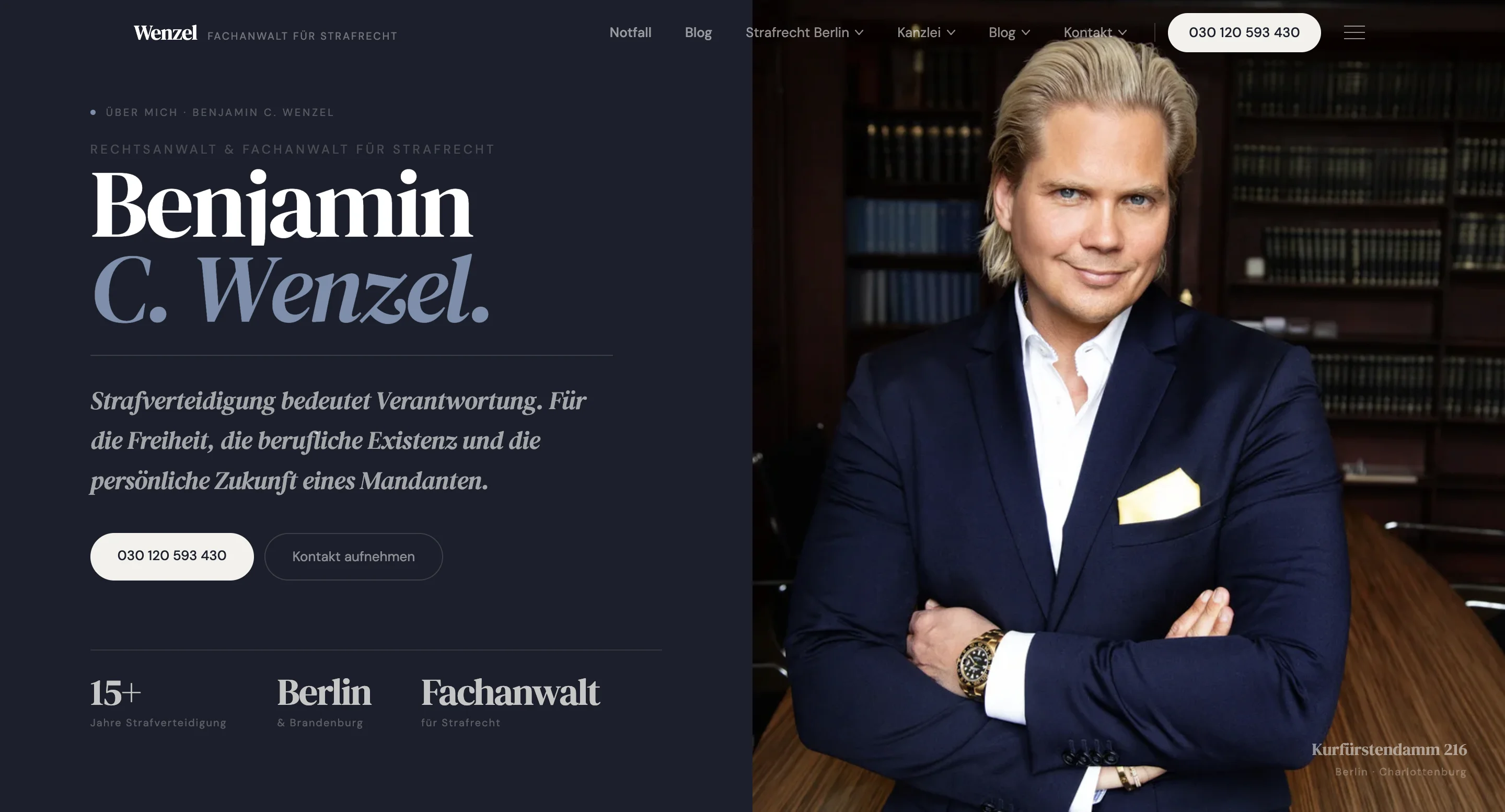
  1. 01Benjamin C. Wenzel - Criminal Defense Digital PlatformDigital Experience & Brand SystemsBenjamin C. Wenzel - Criminal Defense Digital PlatformCriminal defense digital platform with public authority layer, structured case intake, protected client portal, internal case workspace, document workflows, billing state and traceable case events.Read plate
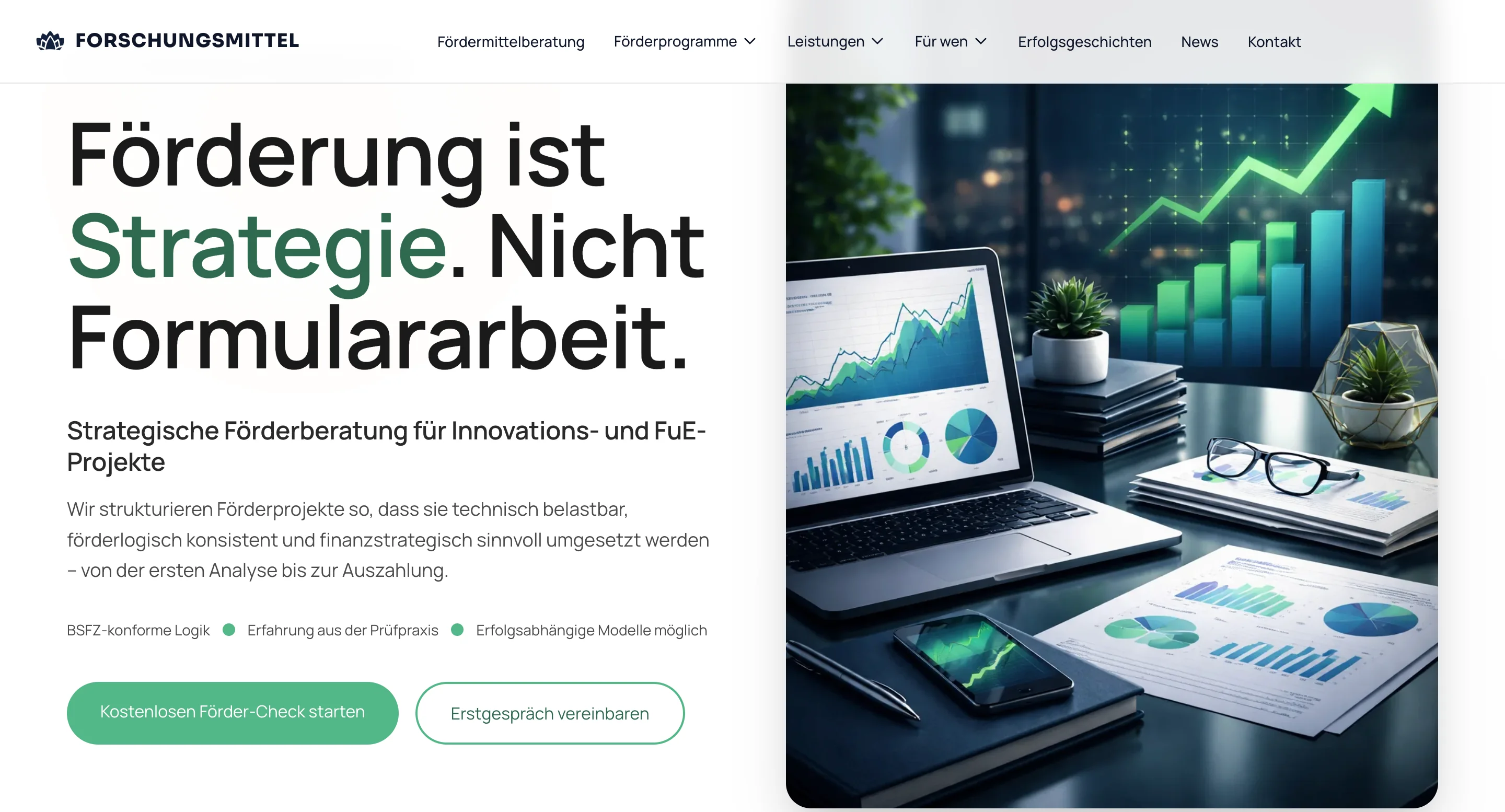
  2. 02Forschungsmittel.comDigital Experience & Brand SystemsForschungsmittel.comB2B funding website and connected product platform with client dashboard, team workspace, document workflow, and operational command center.Read plate
See all case studies
Related services

Relevant services

Frequently asked

Frankfurt advisory portals — common questions

  1. 01Do you build client portals for advisory and professional-services firms?

    Yes. We build secure client-facing portals and internal workflow systems — structured intake, document exchange, status visibility, role-based access and operational ownership — for advisory and professional-services firms in Frankfurt and across DACH.

  2. 02Can an existing DATEV, CRM or document system remain in use?

    Usually yes. The goal is not to replace your system of record but to work around it. We assess the available interfaces — APIs, file exchange or import/export — and define controlled integration boundaries before building anything.

  3. 03How do you determine which system owns documents, status and client data?

    We map the system of record before implementation. For each type of data we agree where it lives, what reads from it, what writes back, and where the boundary is — so the portal doesn't silently duplicate records without a defined owner.

  4. 04Can clients upload documents and view request or mandate status securely?

    Yes. A client portal can provide onboarding, requests, document upload and download, and status visibility behind role-based access, so clients have one clear place to interact with the firm.

  5. 05Can internal teams manage approvals, responsibilities and history in the same platform?

    Yes. The same platform can carry back-office responsibility, status, approvals, document review, exports and an activity history, so internal teams can see where work stands without chasing it across email and spreadsheets.

  6. 06Do you work with Frankfurt-based firms from Berlin?

    Yes. We're based in Berlin and deliver for teams across DACH, including Frankfurt and the Rhein-Main region. Engagements run with on-site kickoff where useful and direct contact throughout.

  7. 07How is this different from a regulated financial-sector software project?

    This service covers client portals and operational workflow software for advisory firms. Projects subject to formal financial-sector regulation, certification or supervisory requirements require separate specialist review and remain the responsibility of the firm and its advisers.

Frankfurt · Client portals & workflow platforms

Discuss your portal workflow

Need a portal workflow your team can actually own? We can review intake, document handling, roles, existing systems and operational ownership before a larger implementation begins.

Discuss your portal workflowSee relevant platform work
When this becomes relevant

Where advisory portal projects become relevant

Specific situations we see with Frankfurt and Rhein-Main advisory firms. If two or three sound familiar, a portal or workflow platform is worth scoping.

Client documents and workflow status are fragmented

Mandate documents and their current status live across email, shared drives and separate tools, so there is no single place to see where things stand.

Internal teams cannot see status clearly

Partners and staff have to ask around or open several systems to answer 'what's the status'. The information exists — it is just not visible in one place.

Clients repeat the same administrative steps

Clients send or upload the same document more than once because there is no clear, single channel for intake and exchange.

Portal scope is unclear before implementation begins

Everyone wants a portal, but the workflow, roles and ownership are not documented yet, so the build risks redesigning itself repeatedly.

Existing systems

Existing accounting and document systems

We do not silently duplicate records from your existing systems without a defined owner. Where accounting, CRM or document systems are part of the workflow, we map the system of record, assess the available integration paths and define where the portal reads, writes or stays out.

  • Map which system is the system of record for each type of data
  • Assess available integration paths — APIs, file exchange, import/export
  • Define controlled write-back boundaries before implementation
  • Document the limitations and what is not technically available

DATEV provides documented APIs and DATEV-format exchange routes, but supported data and approval requirements depend on the specific programme and integration path. We do not present every DATEV workflow as available before technical verification.

Data handling

Data handling and infrastructure options

Where client documents or personal data are involved, infrastructure region, access control, retention, external providers and handover documentation are reviewed as part of the agreed scope. EU infrastructure options can be considered where relevant to the client's requirements.

We provide technical implementation and documentation within scope; legal compliance assessment and professional-sector obligations remain with the firm and its advisers.

Honest scoping

When a custom portal may not be the right first step

A custom platform may be premature where the workflow is not yet documented, responsibilities are unclear or the existing system setup can be improved without custom development.

We will not recommend a portal simply because document exchange or status tracking is inconvenient. The workflow, ownership model, access needs and integration constraints should justify the build first.