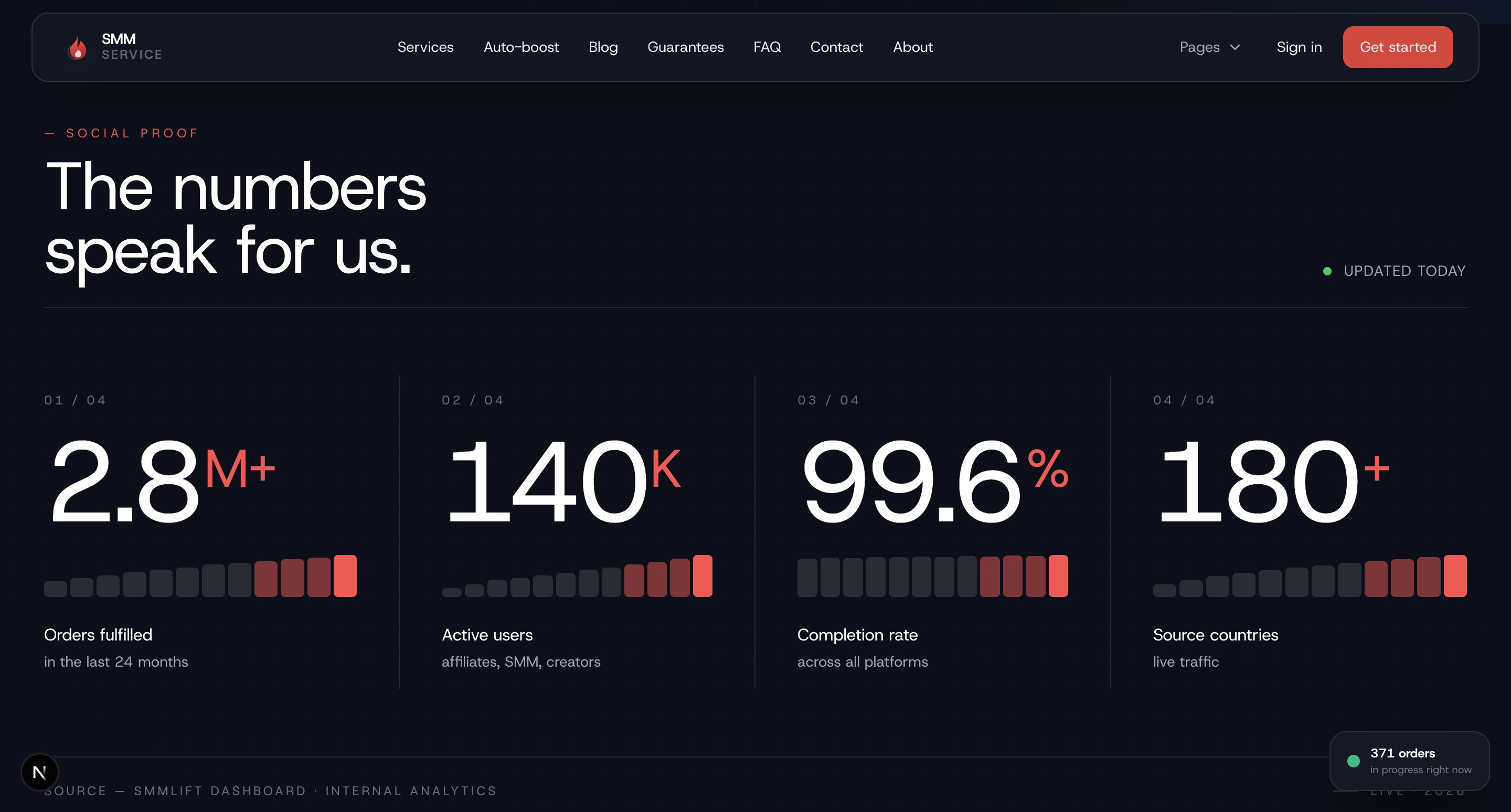
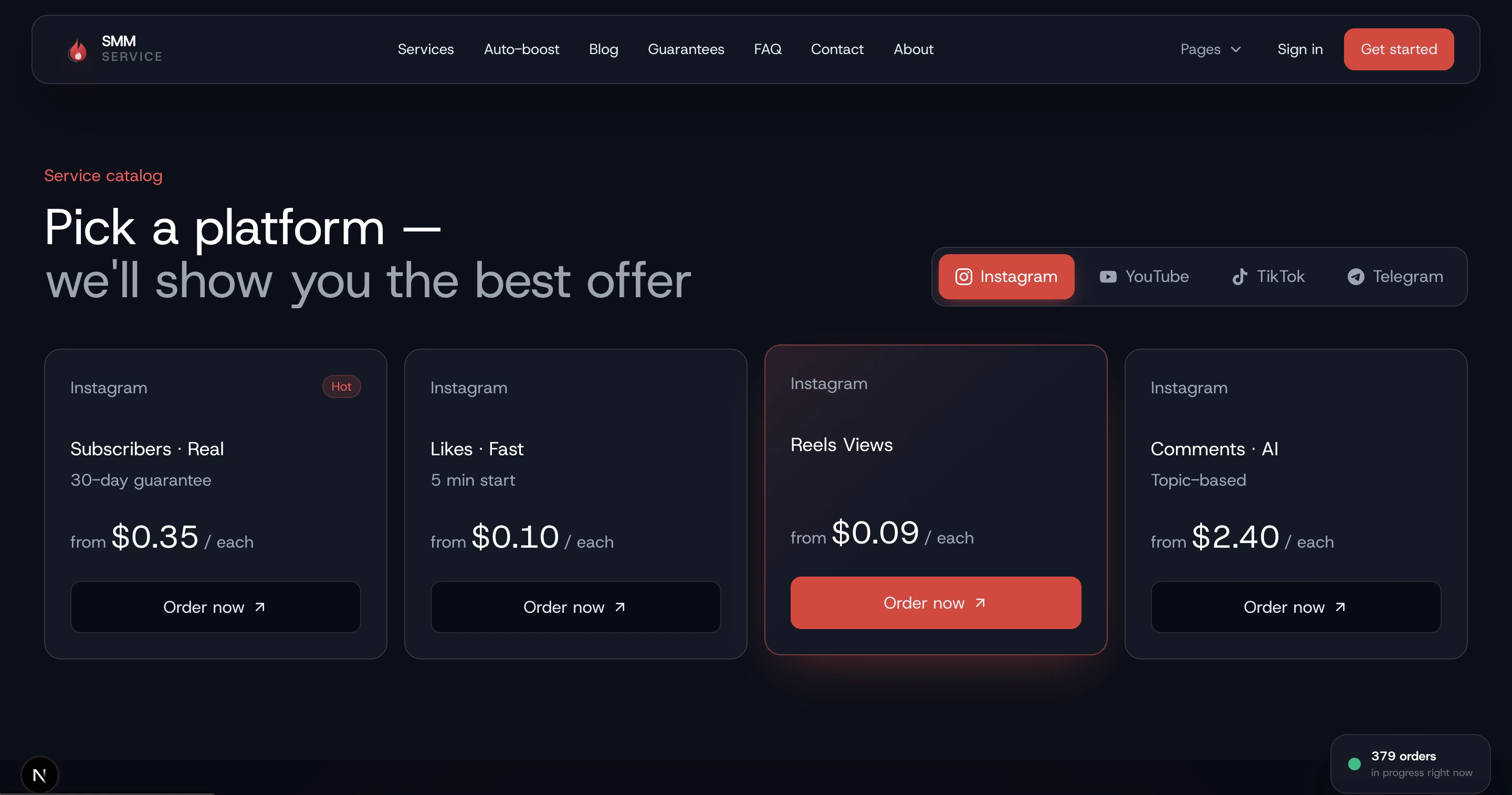
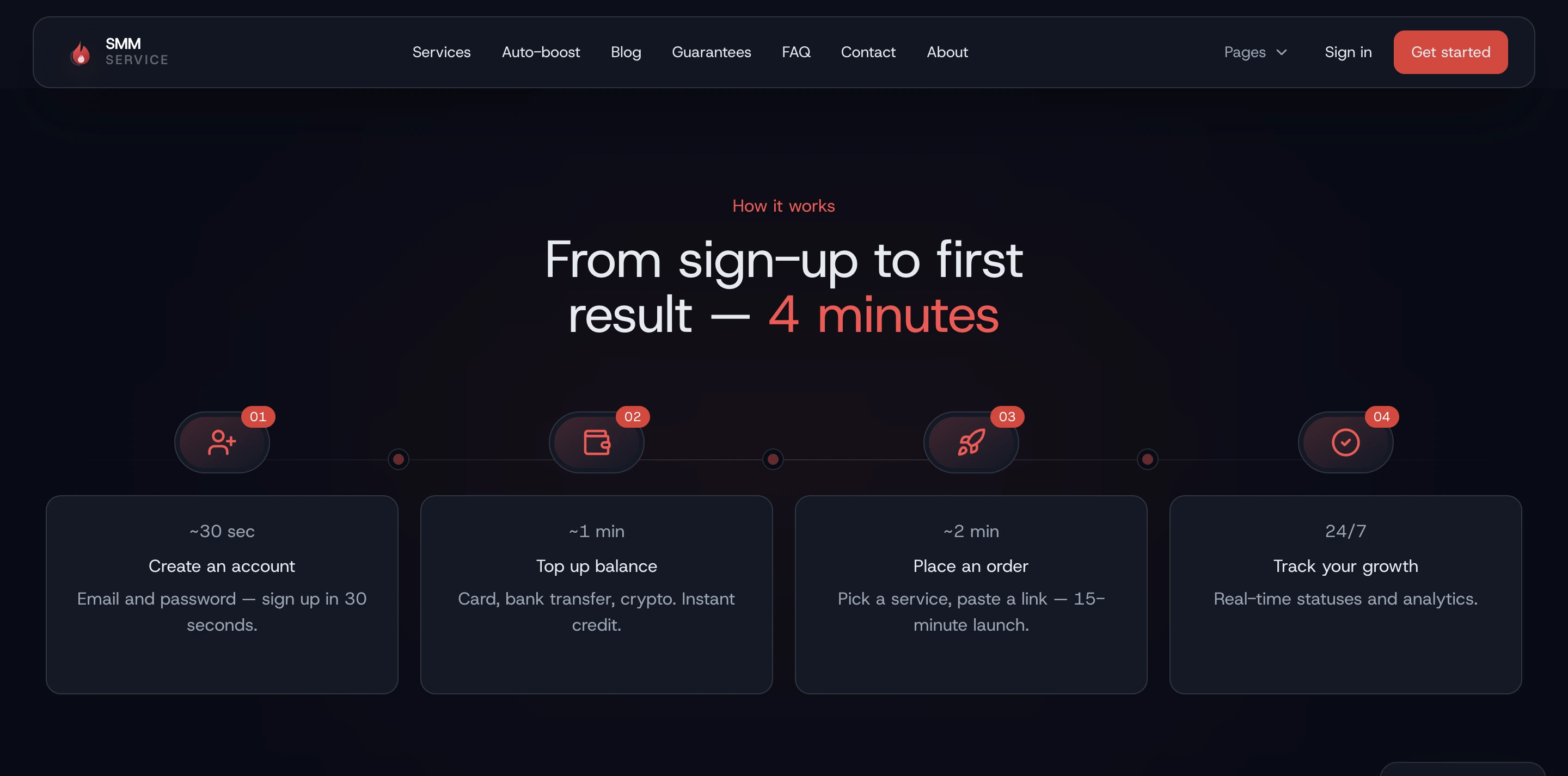
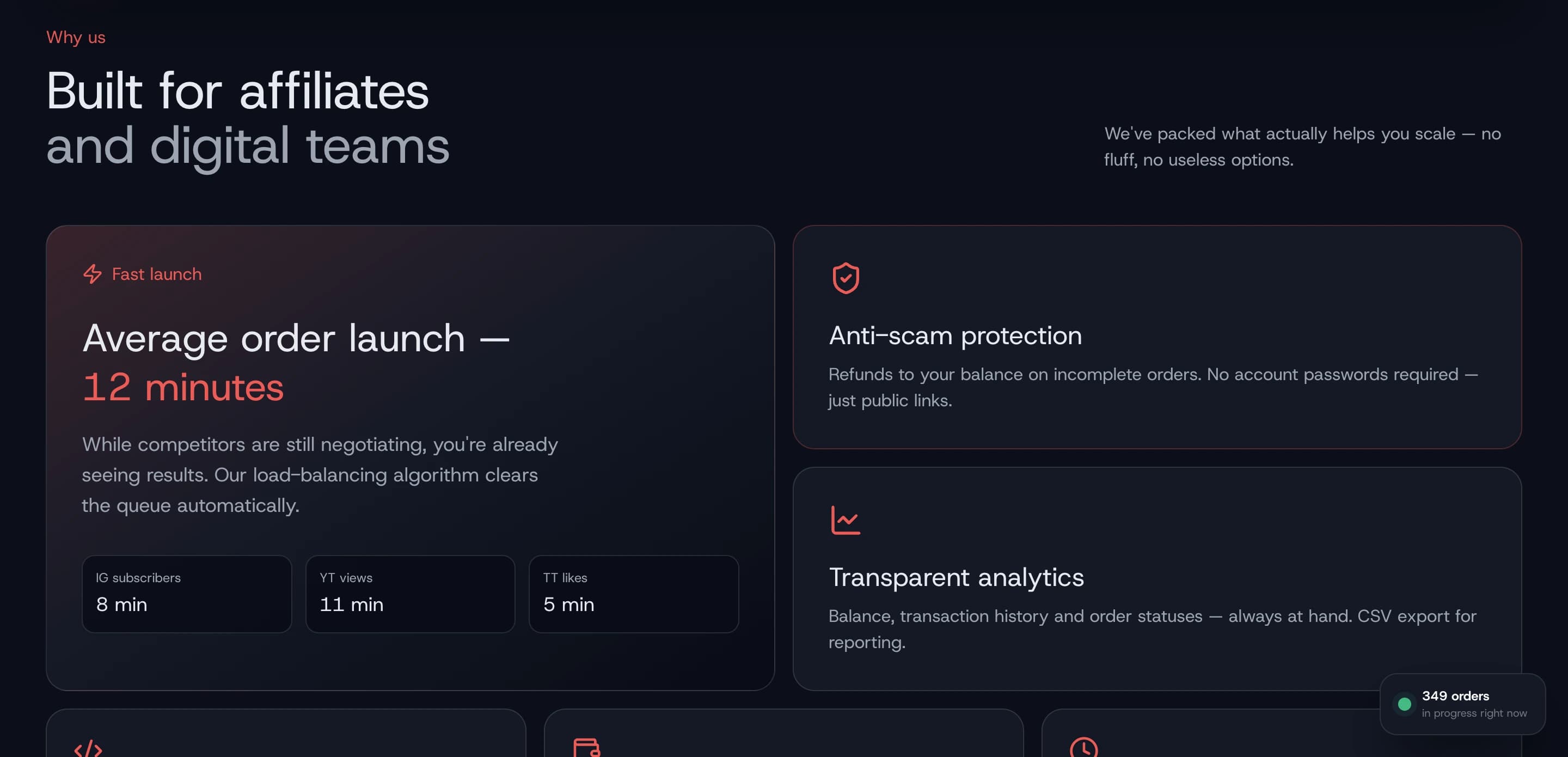
For comparable platform engagements, see our Backend development and Startup & MVP development services.
Decision Context
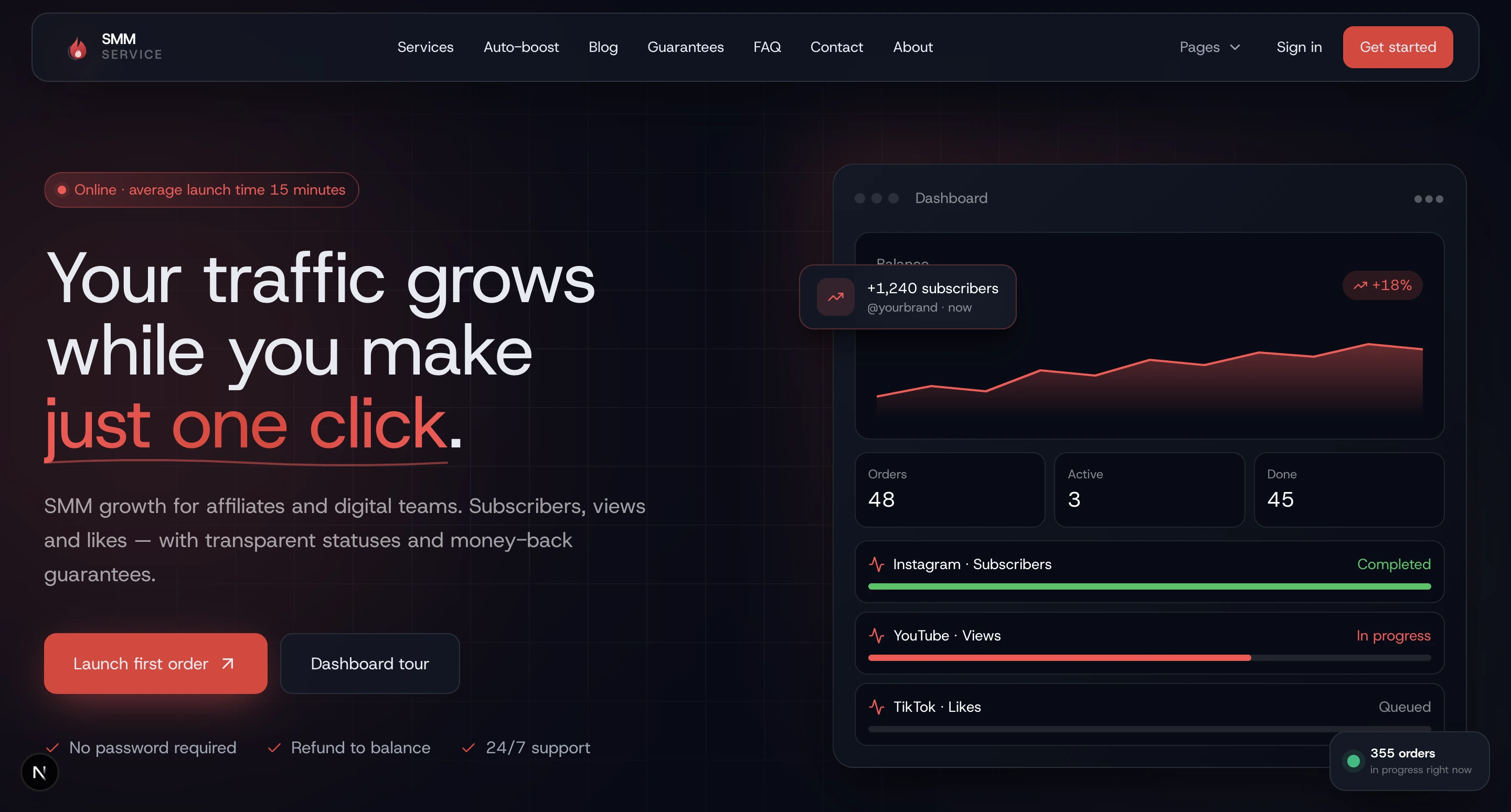
The project combined a fast-moving customer surface with operator-grade backend control. The same platform had to support public discovery, authenticated ordering, payment/refund flows, provider catalog updates and admin intervention — without letting upstream catalog changes break customer-facing orders.
Treating this as either a thin storefront or a back-office tool would have produced the wrong system. We modeled it as a single platform with three distinct surfaces — public marketing site, authenticated customer dashboard and admin operations console — sharing one canonical service registry and one pricing engine.
Key risks:
- Upstream catalog changes affecting prices, limits and availability.
- Payment and refund flows requiring reliable state handling.
- Multiple user roles across customer, support and admin surfaces.
- Operator actions needing traceable records.
- Pricing changes requiring control without developer involvement.
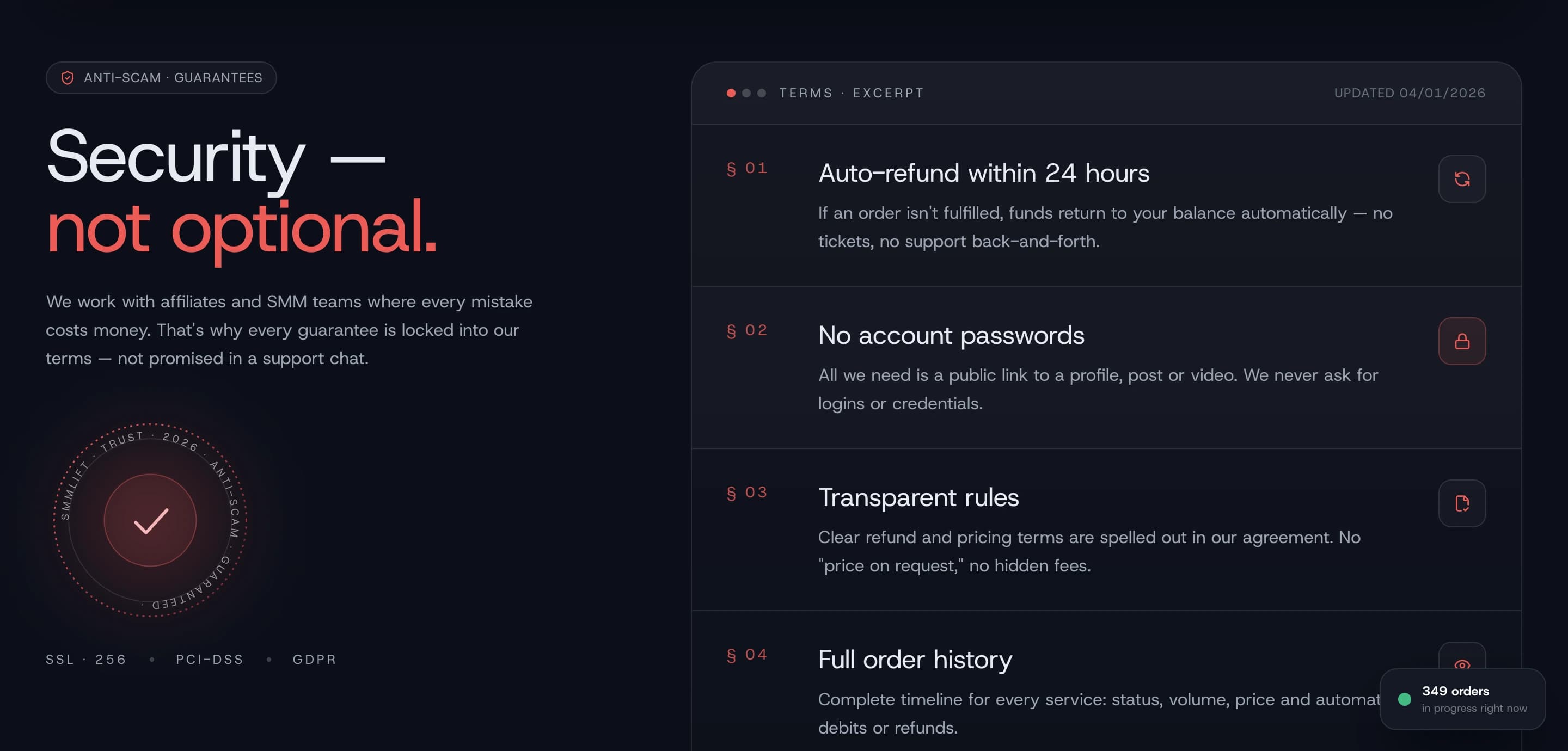
We designed the platform around a single canonical service registry, a pricing engine that lets the operator override provider markups at any level, and an audit log on every state-changing action — so the operator can review what was charged, refunded or changed, and by whom.
Platform Scope & Capabilities
The system covers the complete order lifecycle from public discovery through payment, fulfillment, compensation/refund and reporting. Three coordinated surfaces share one backend.
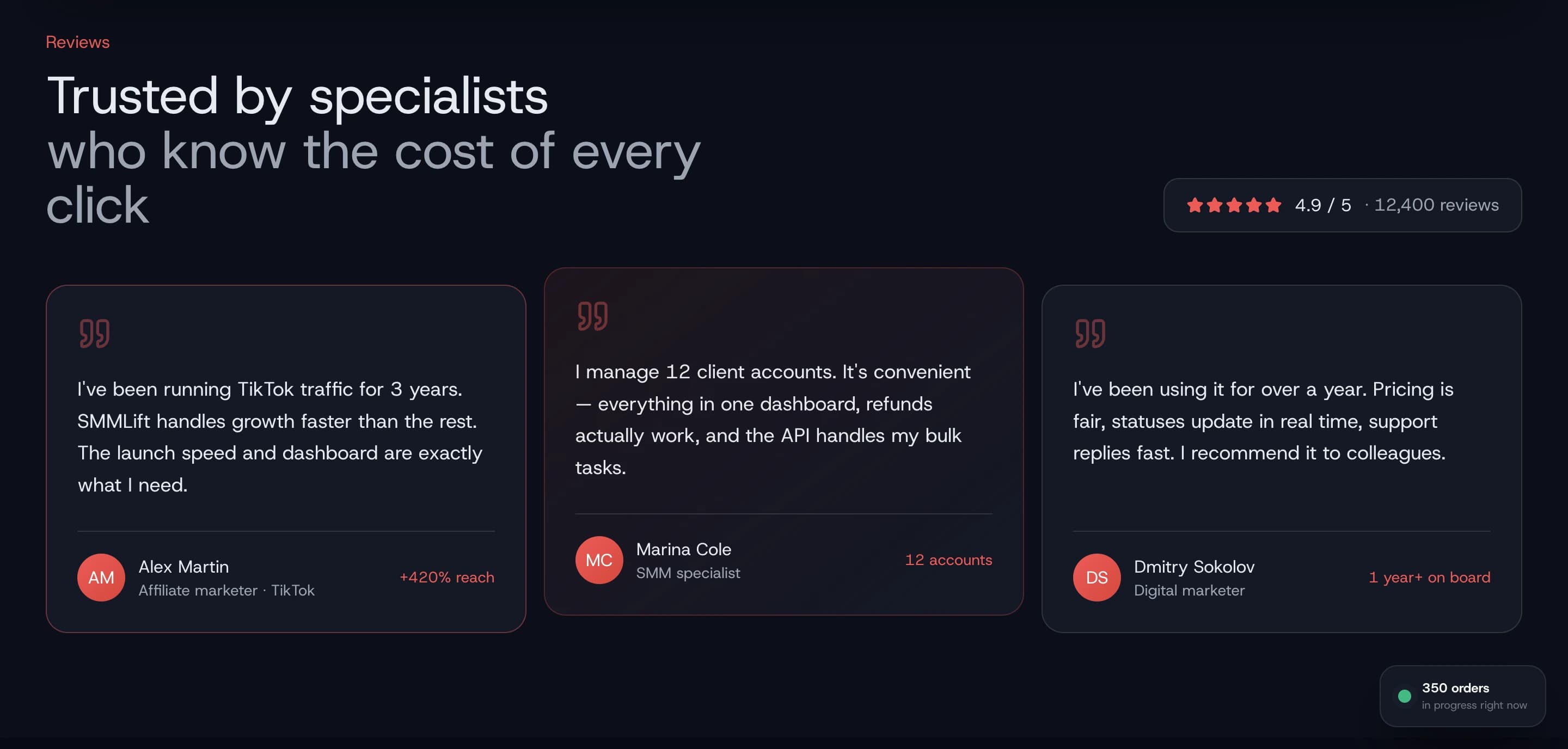
Key capabilities:
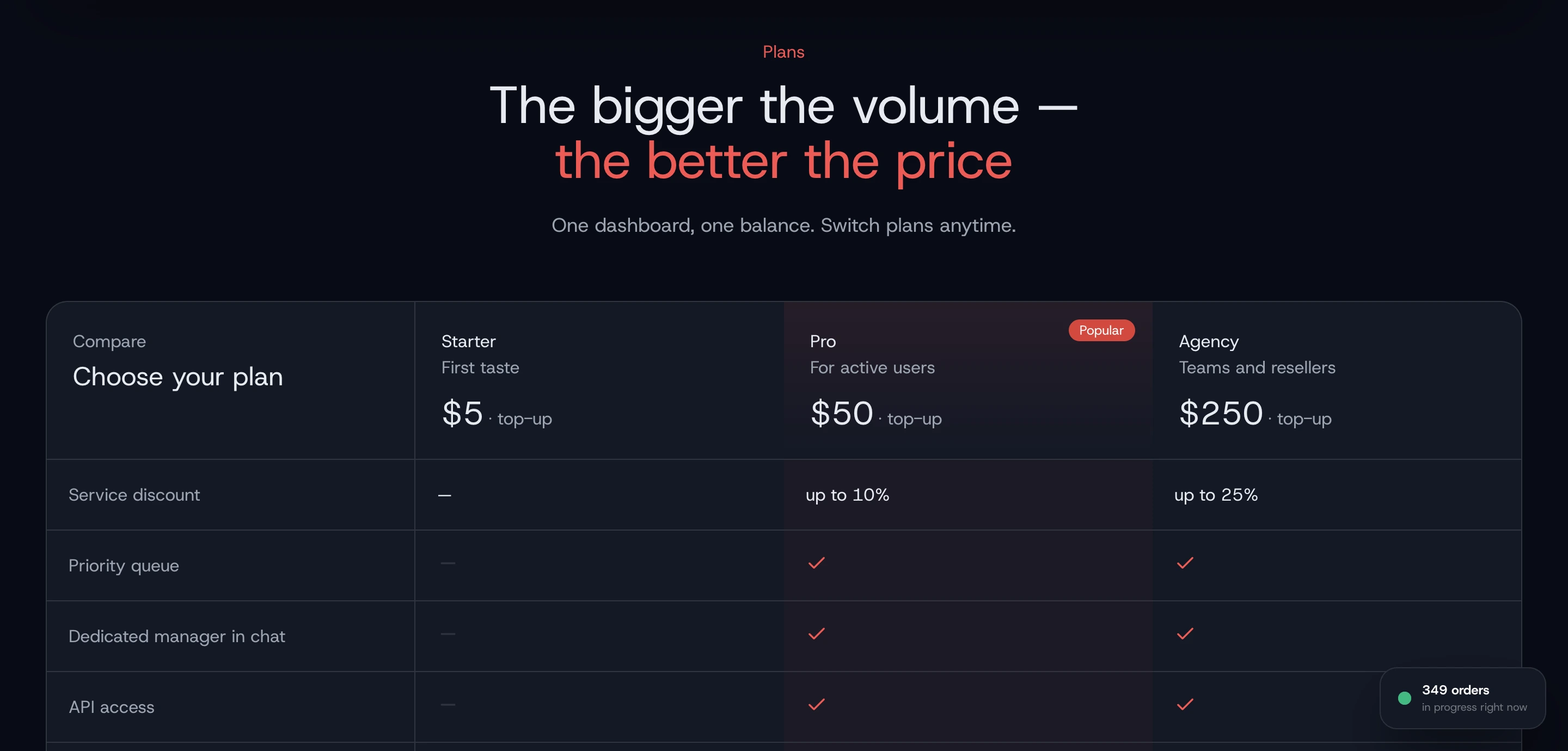
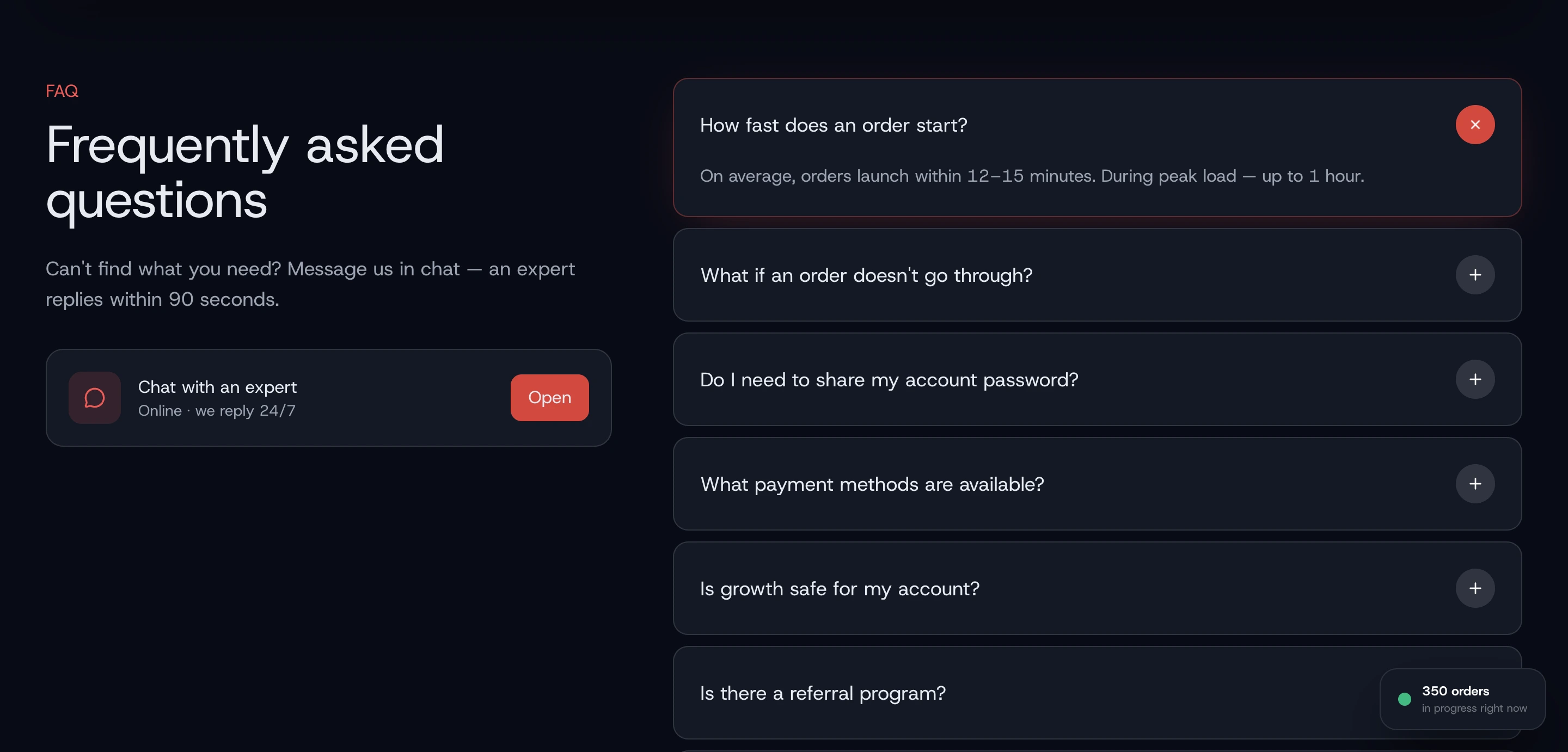
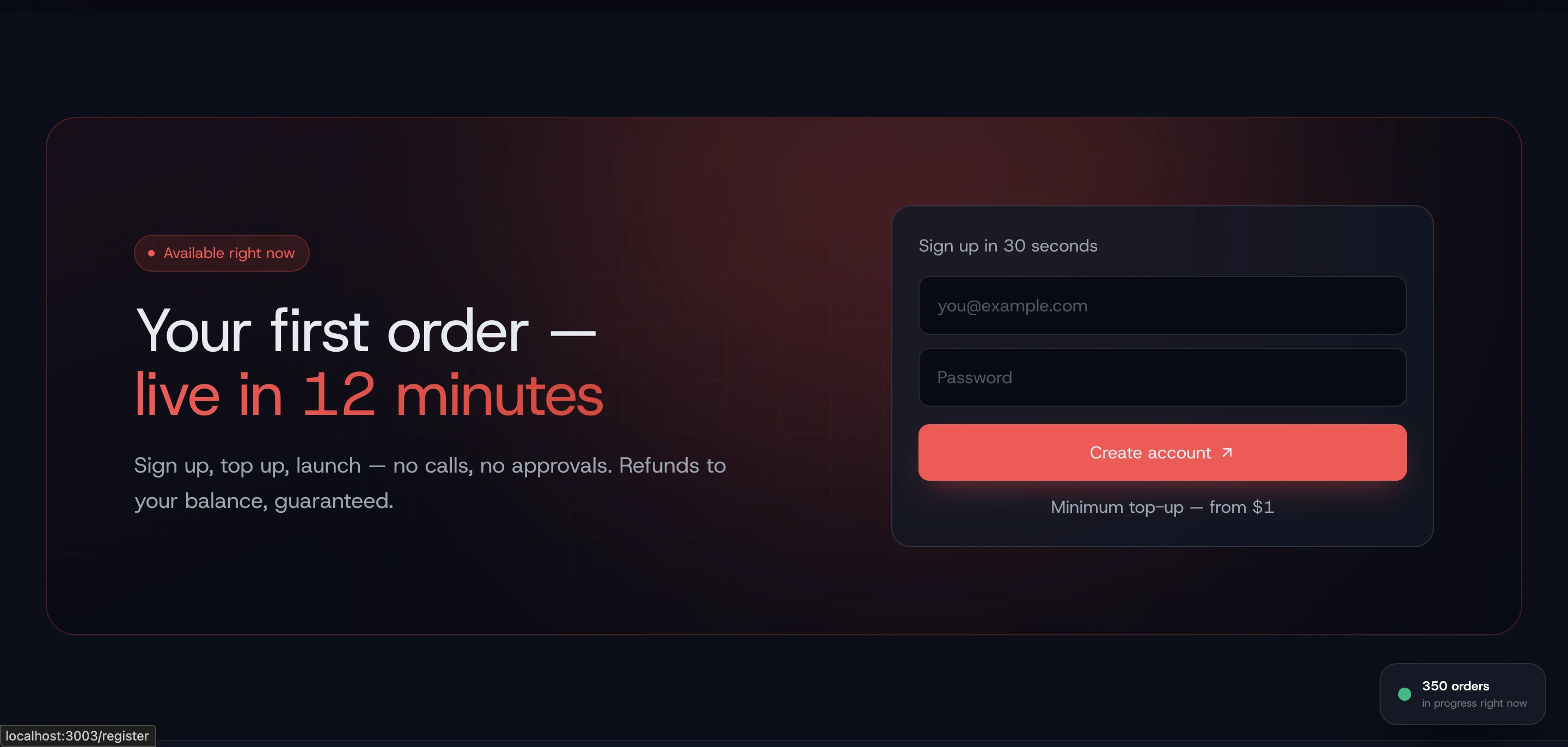
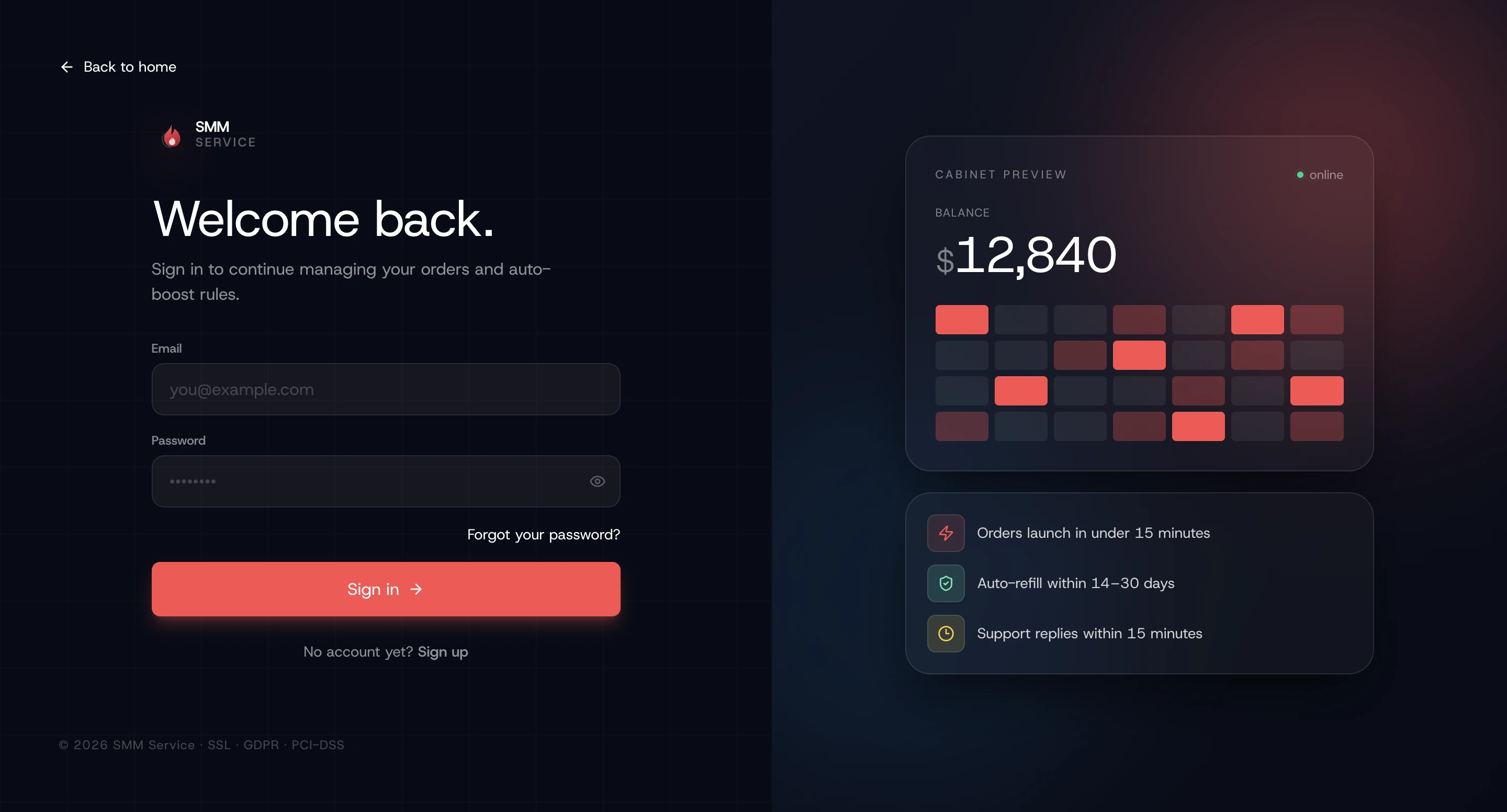
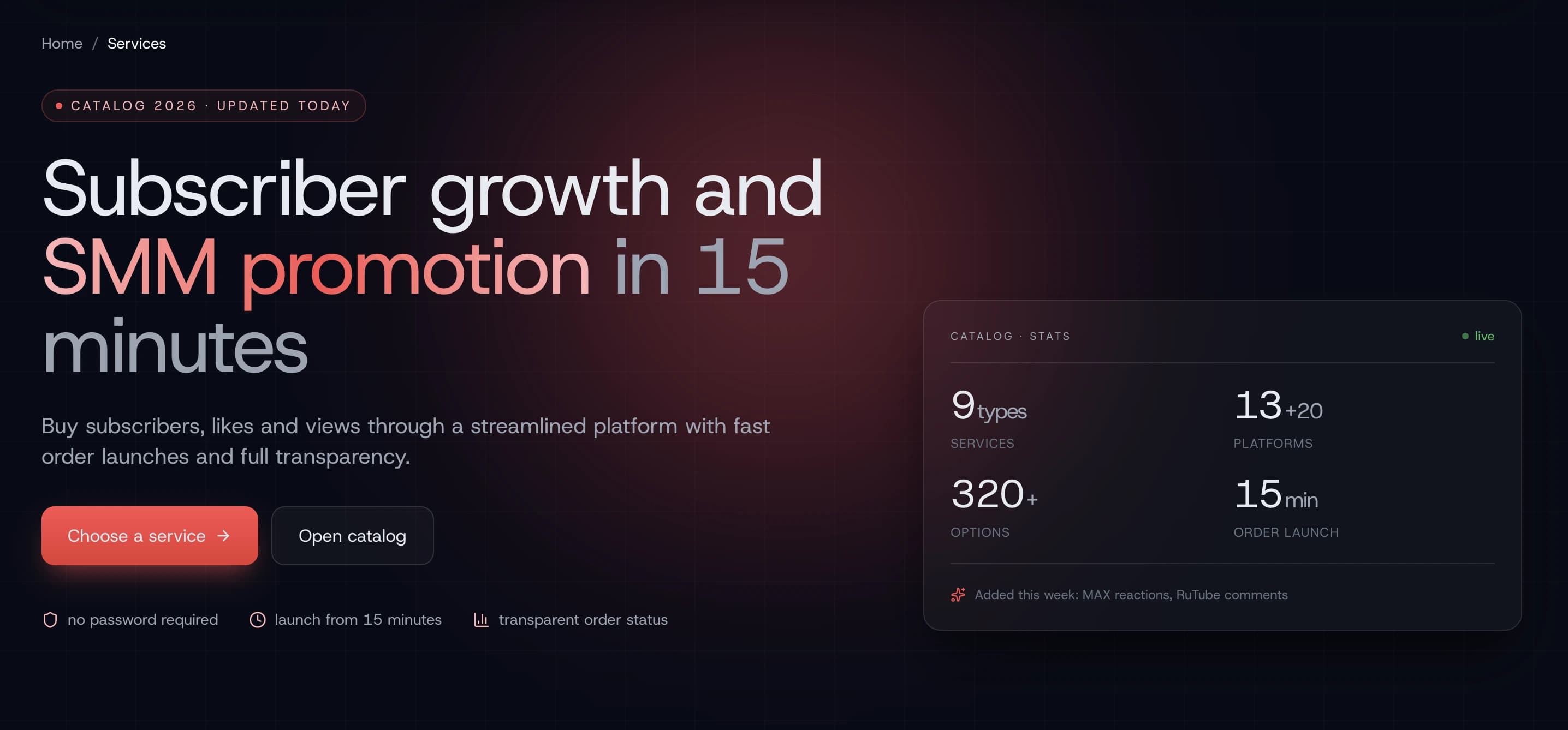
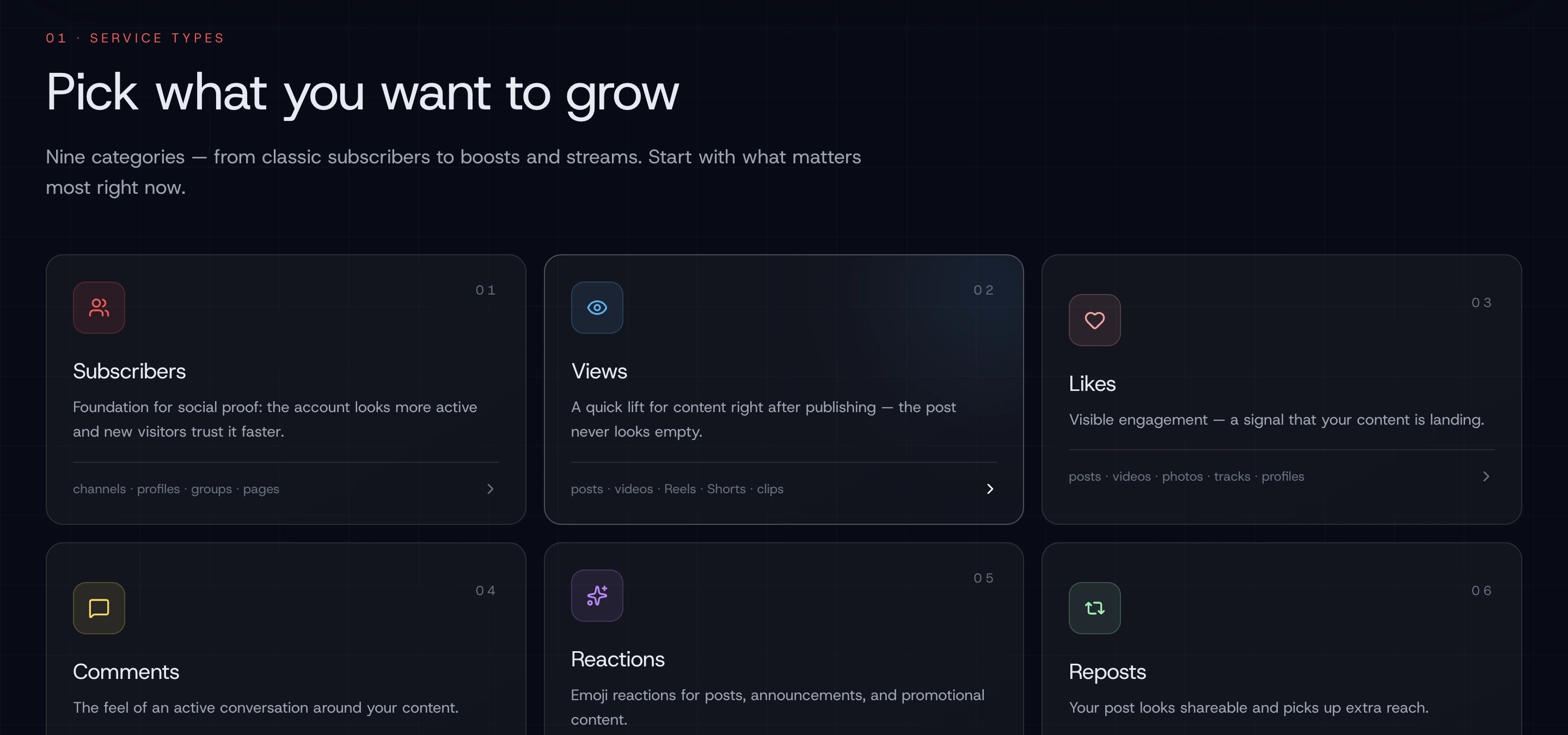
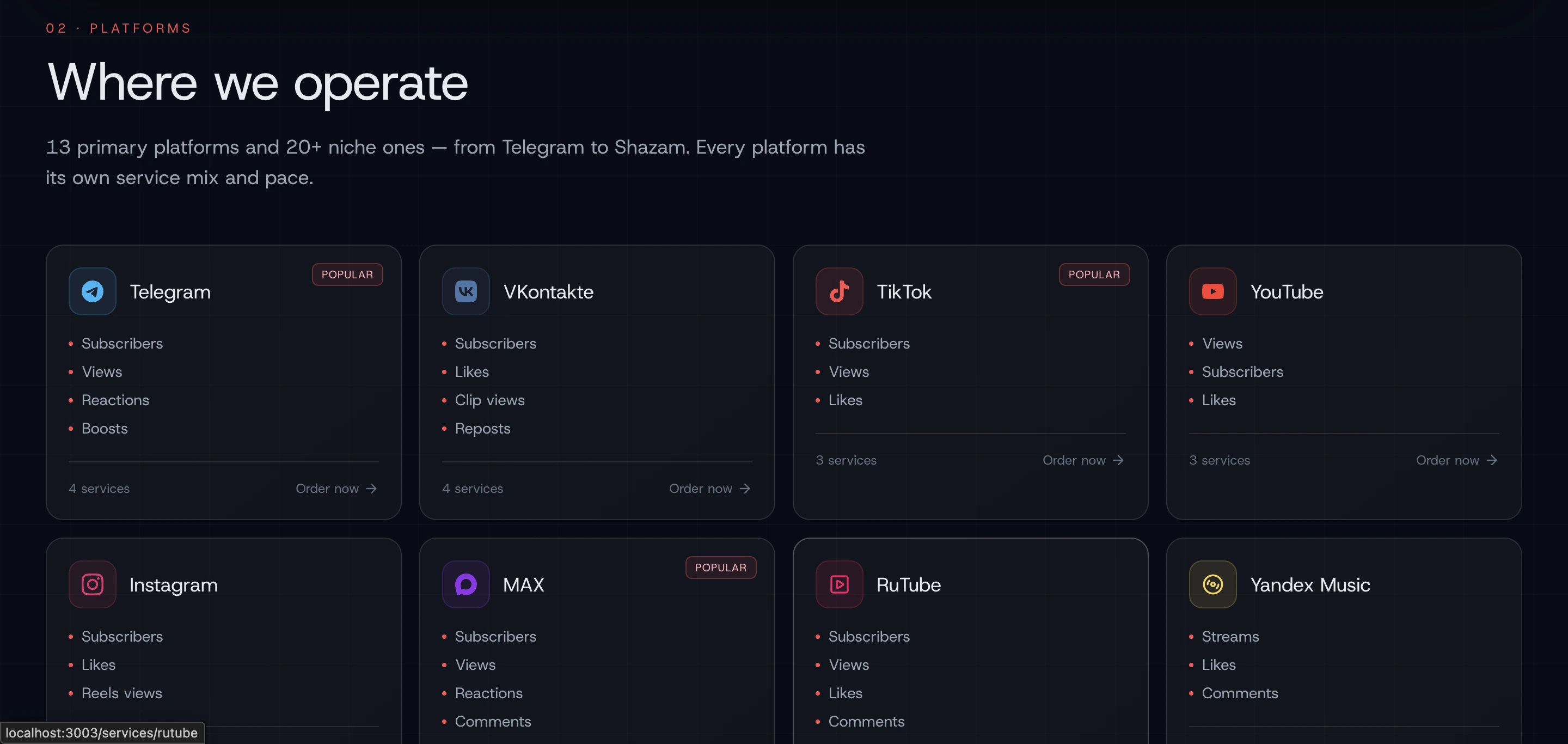
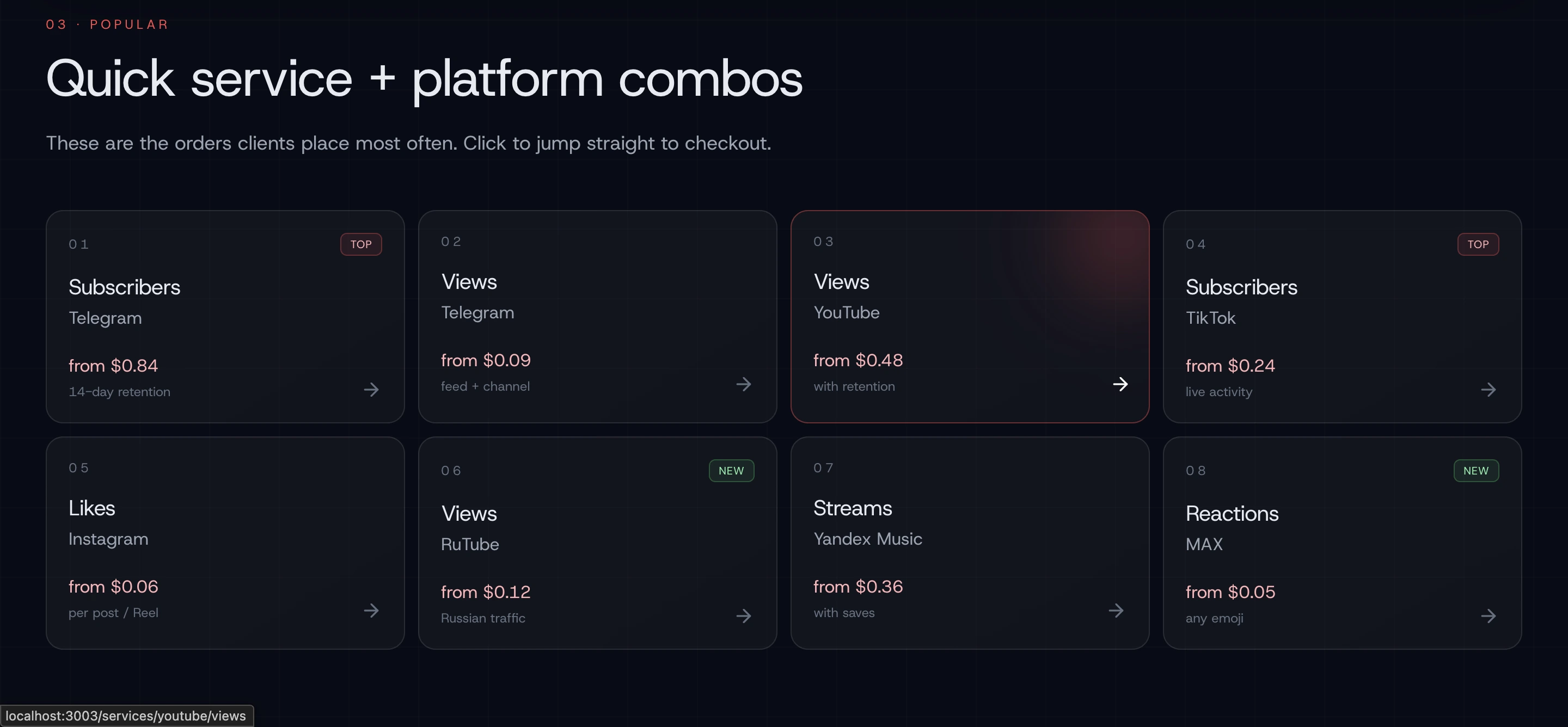
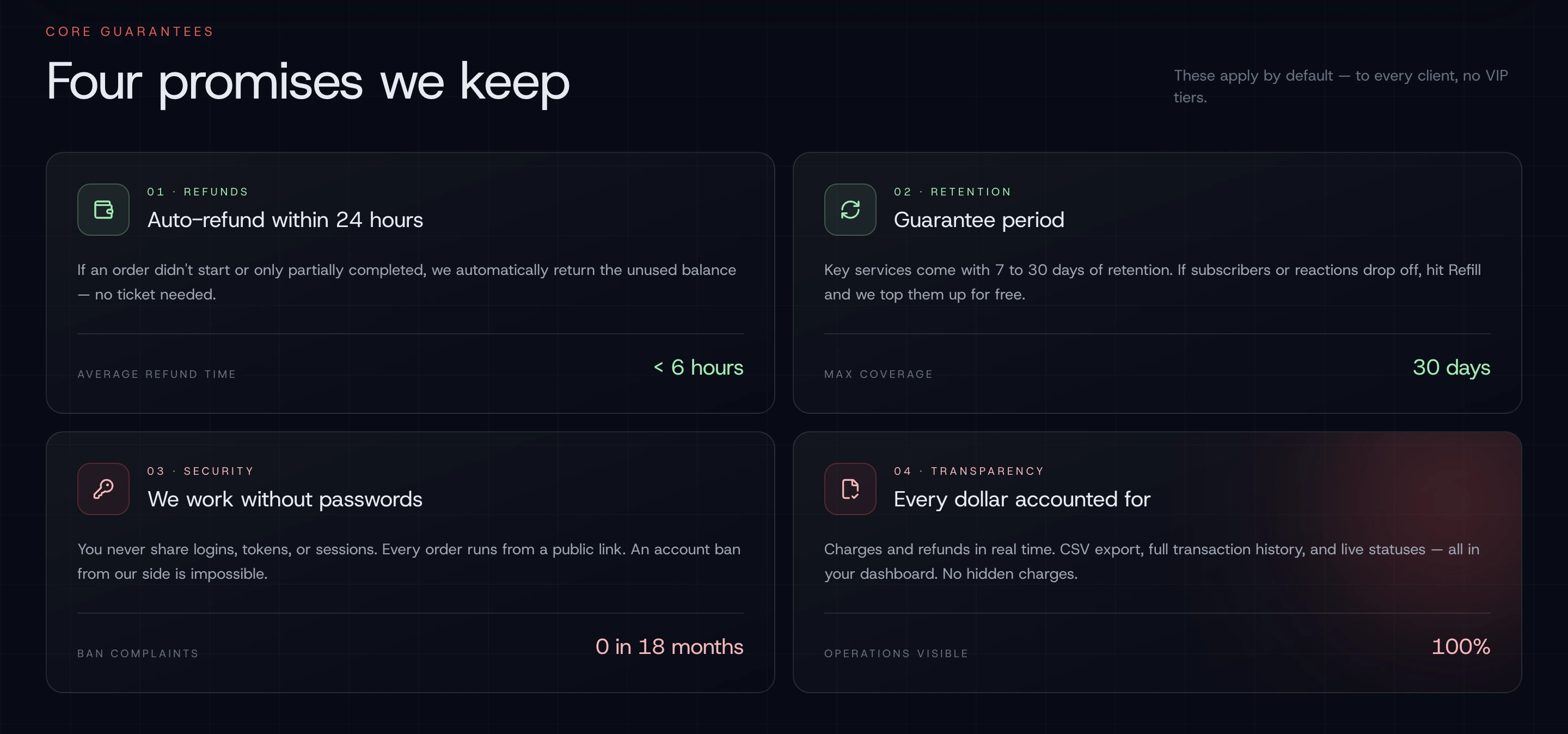
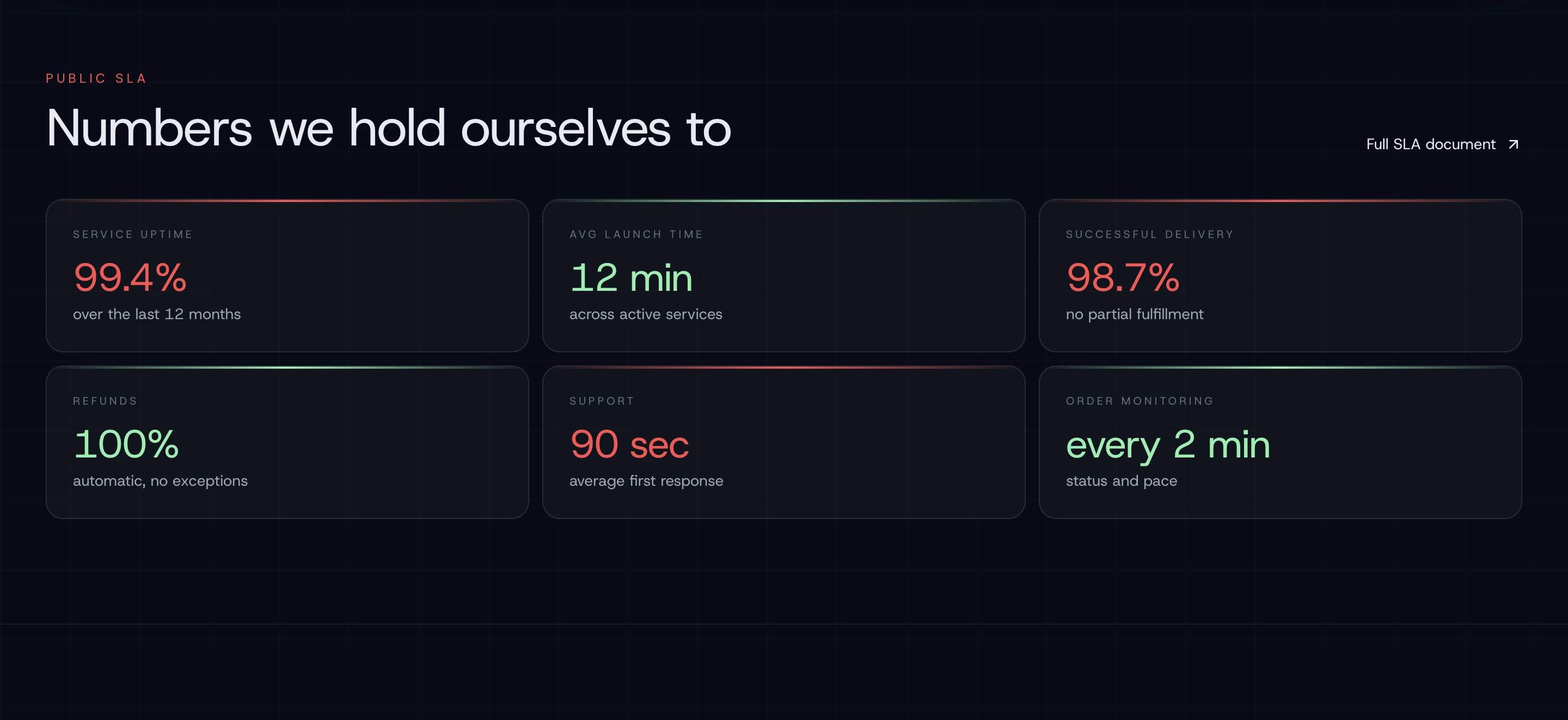
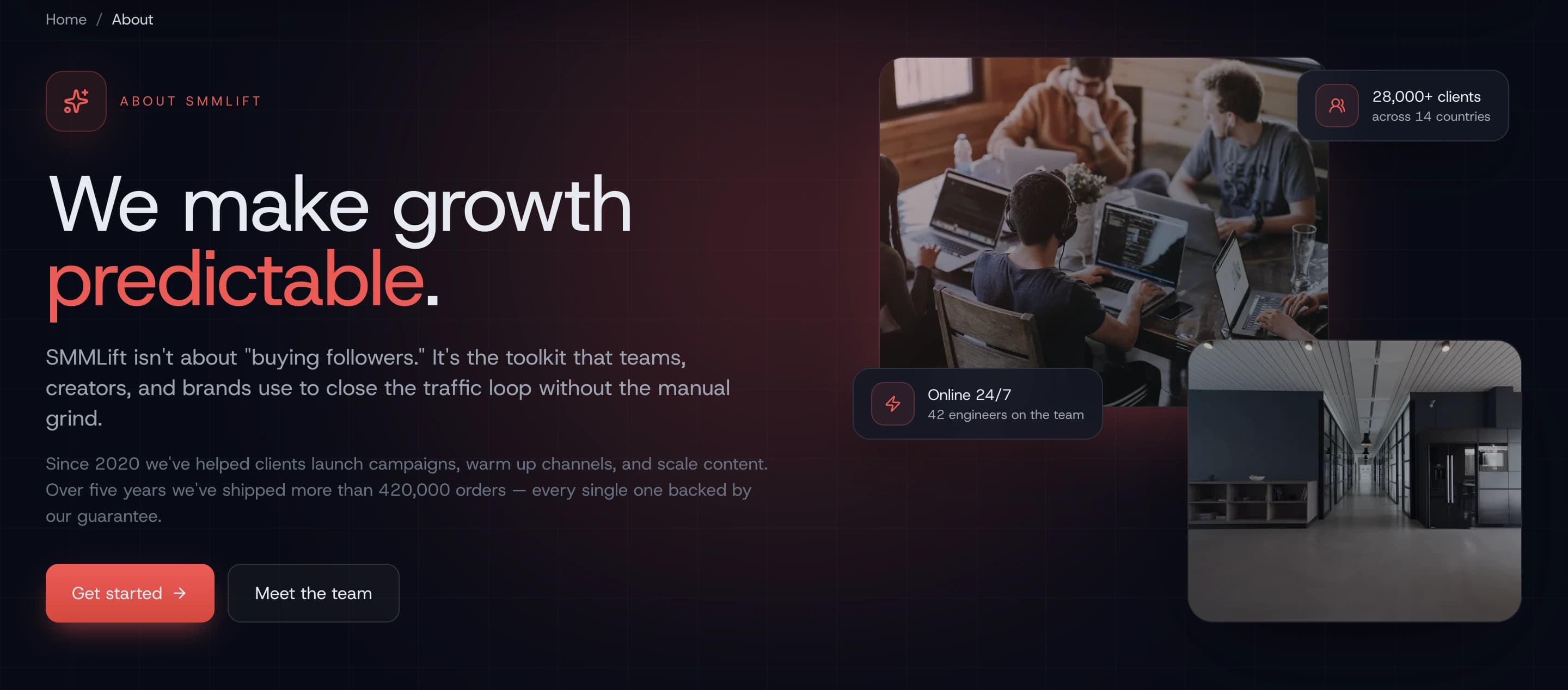
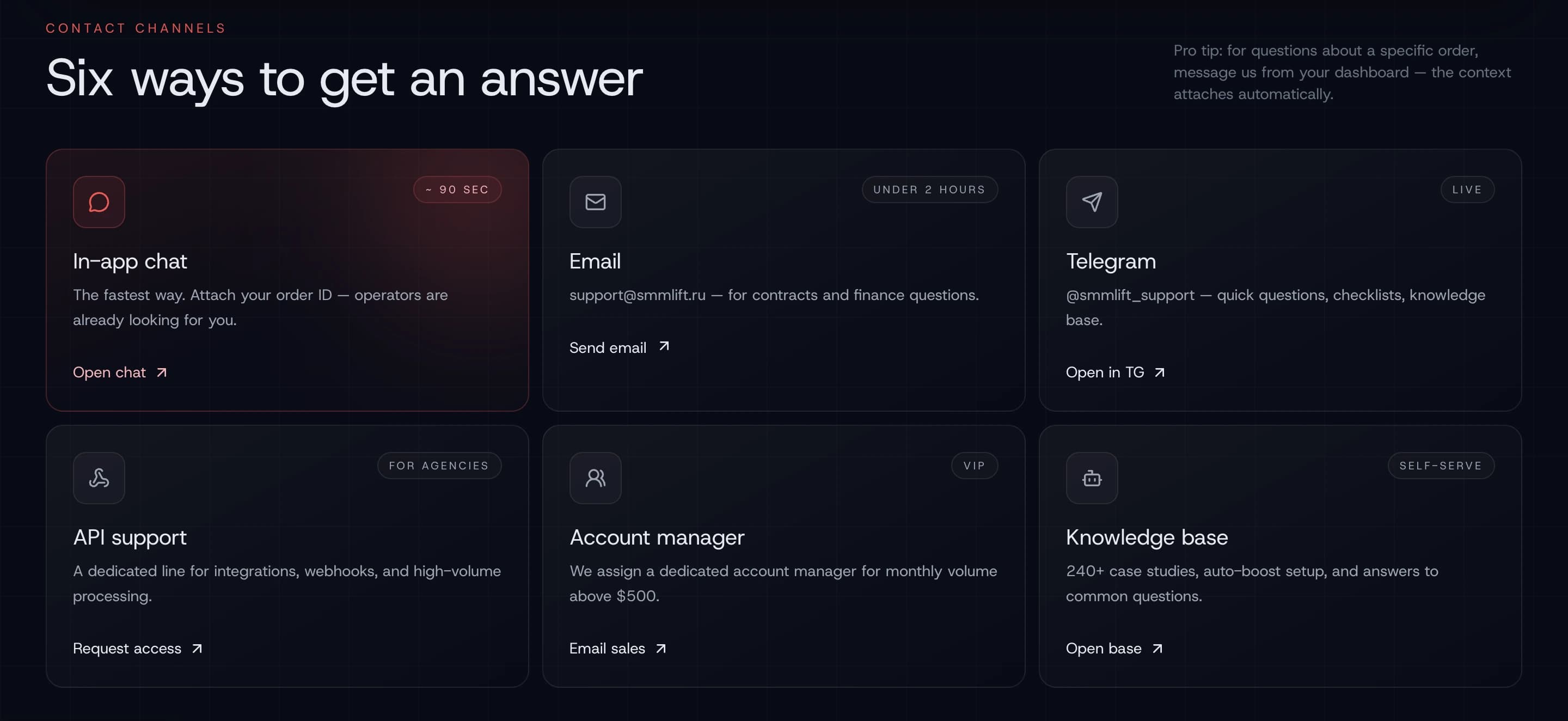
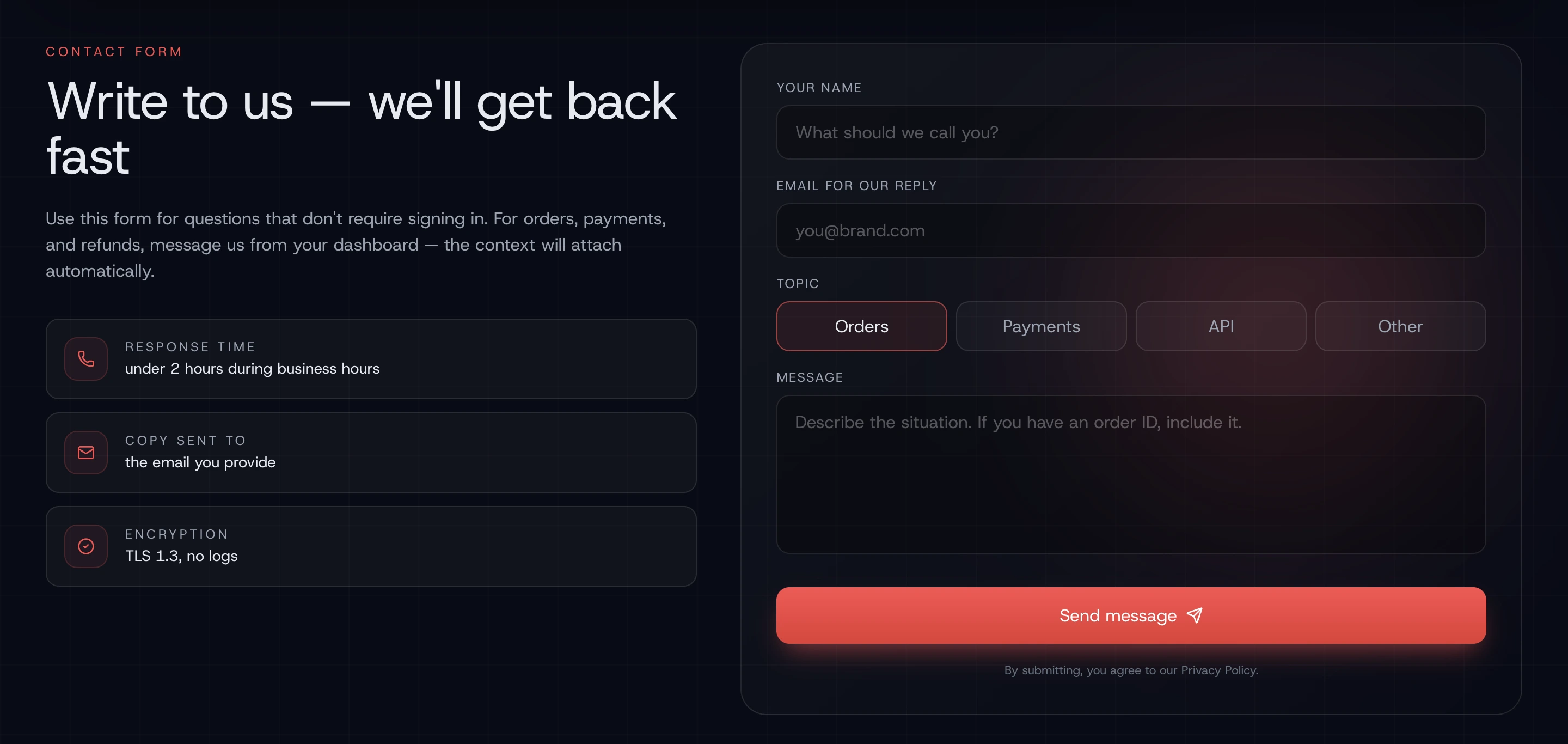
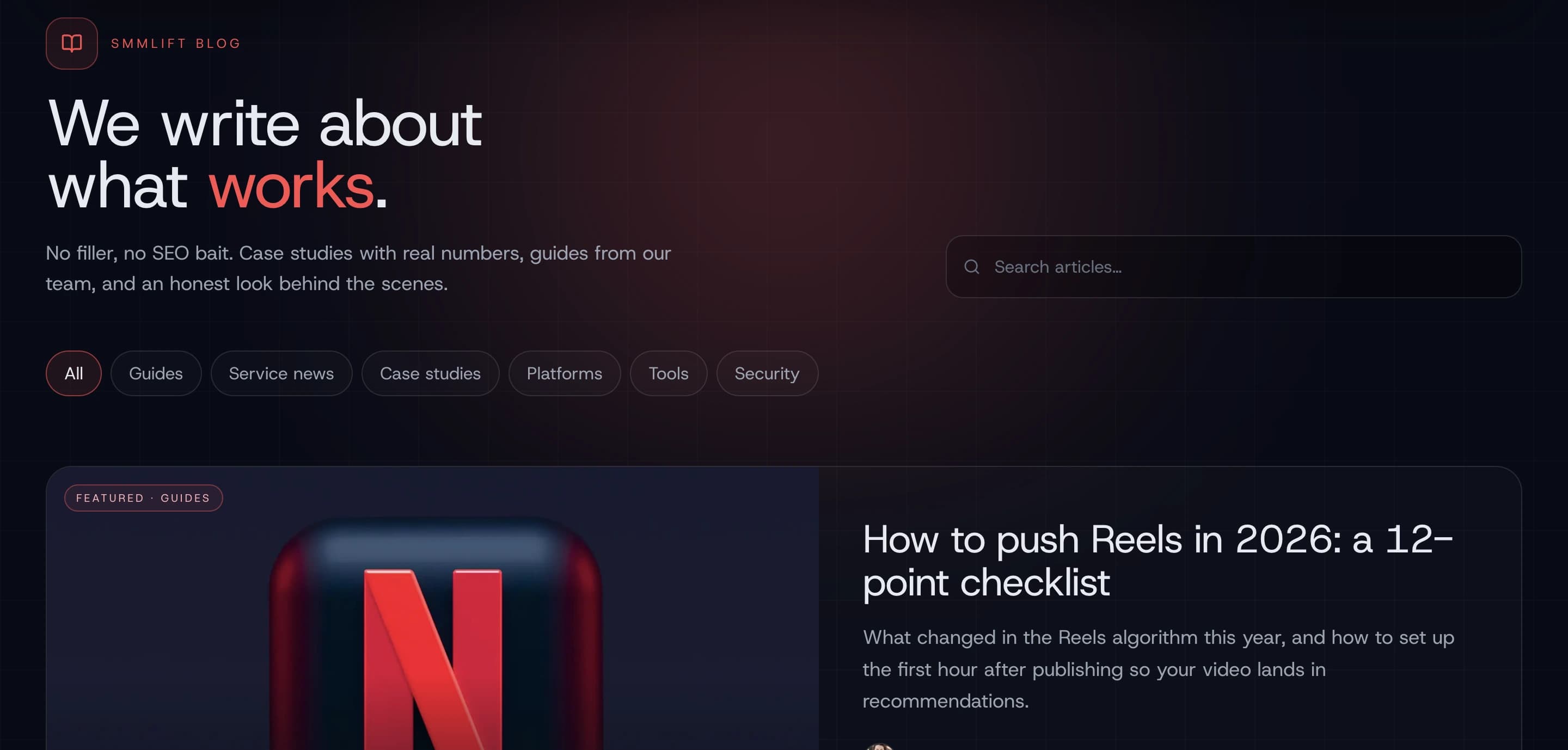
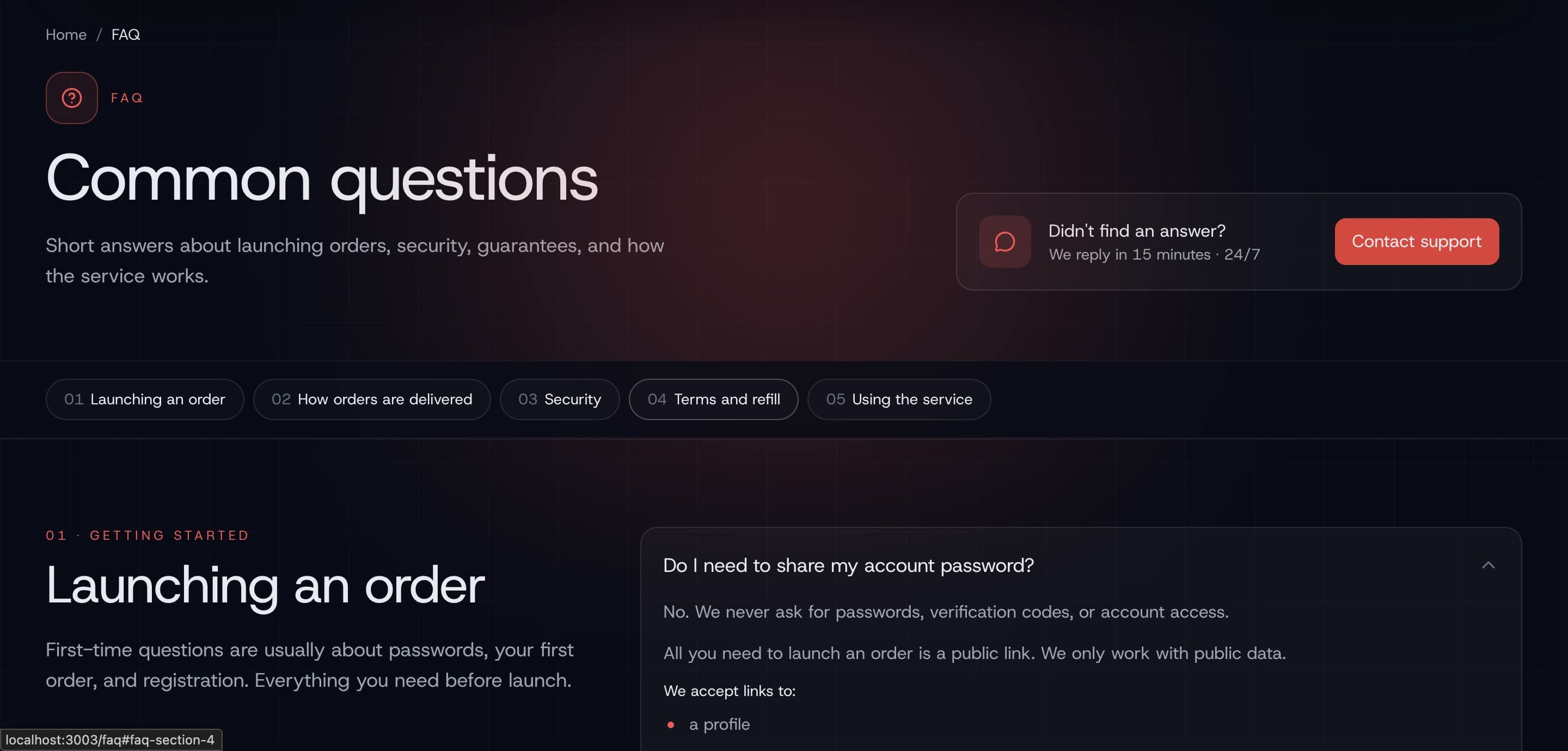
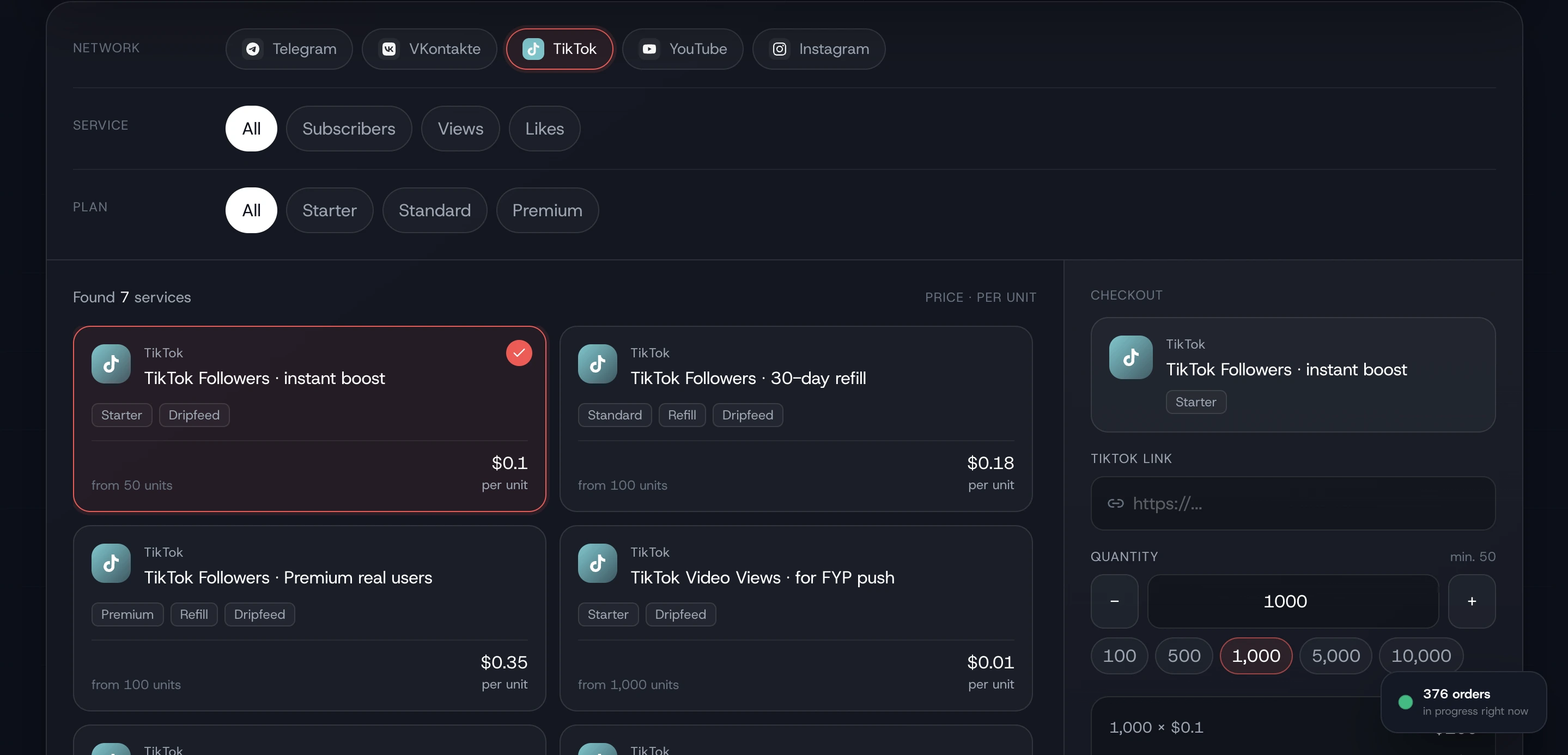
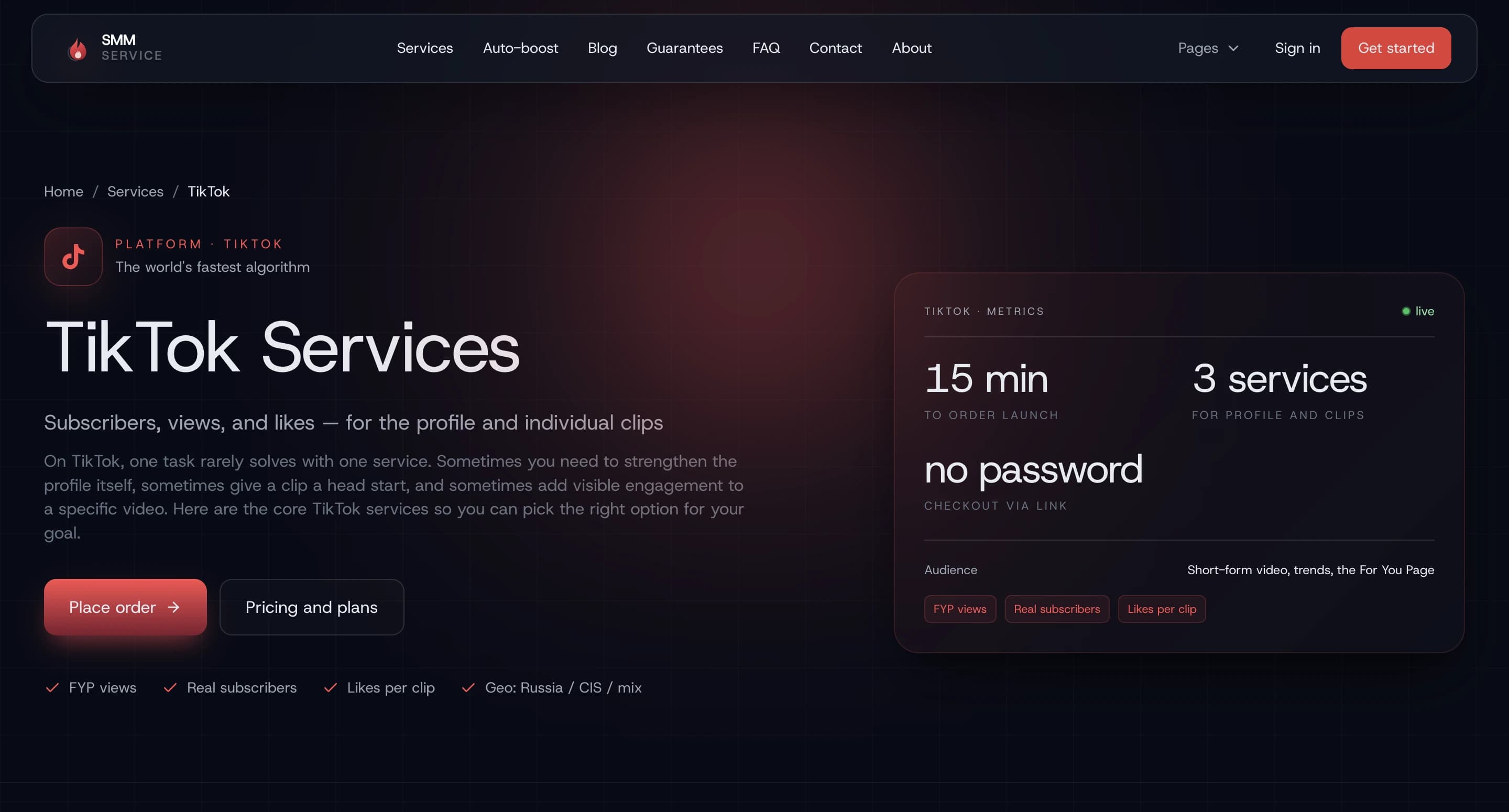
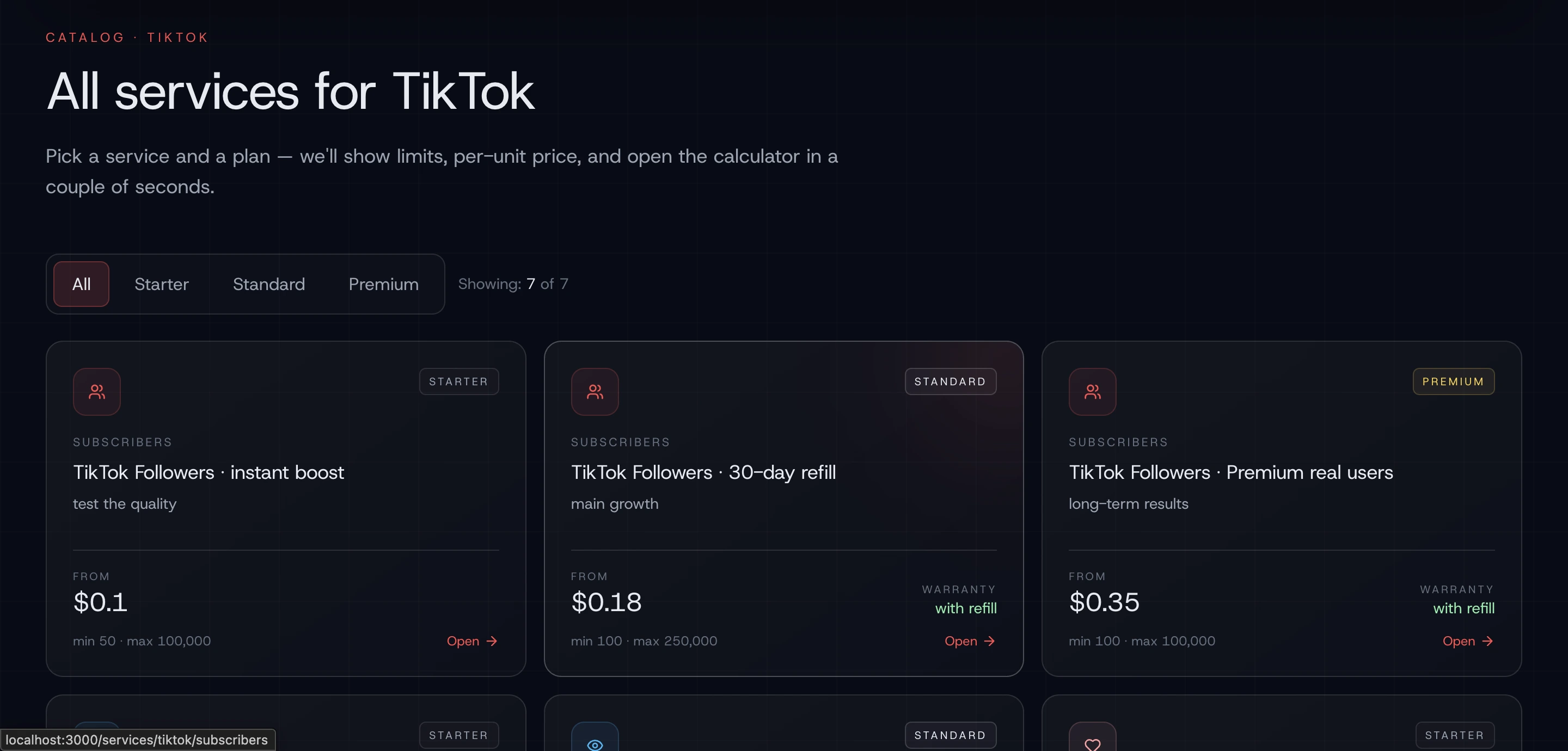
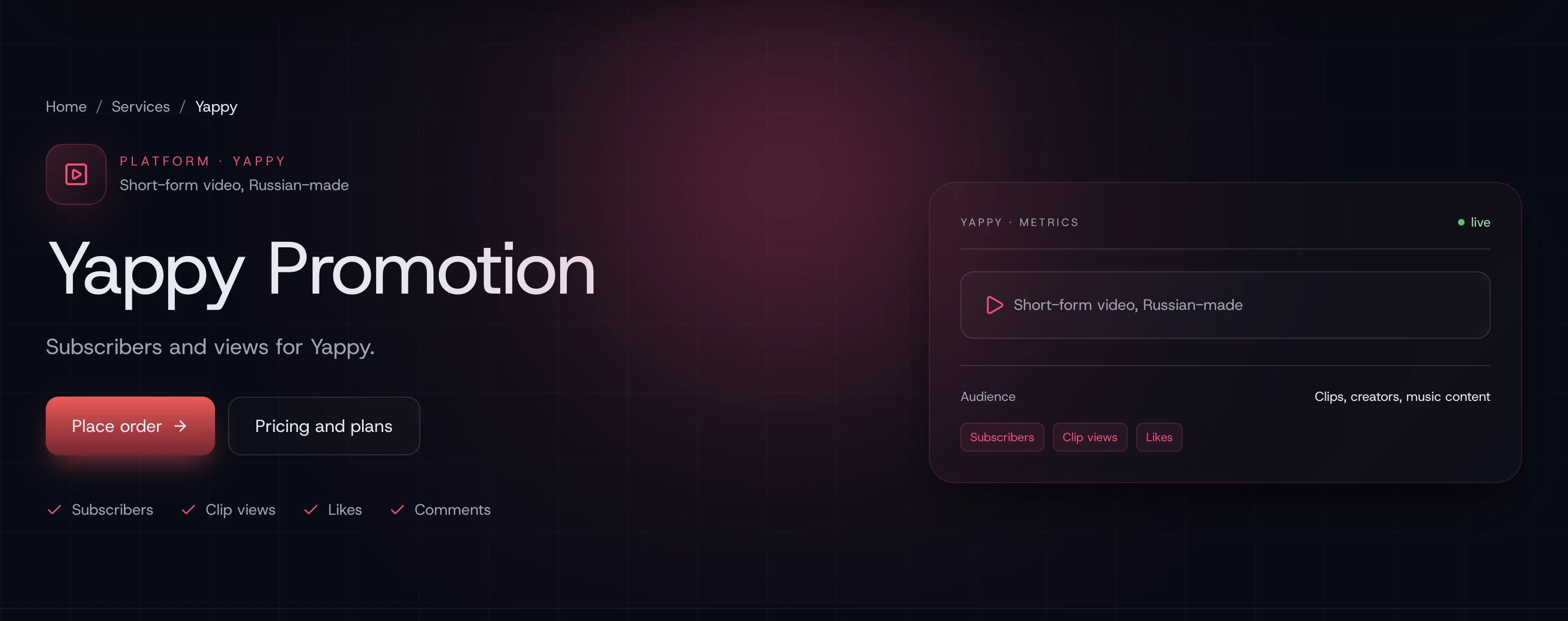
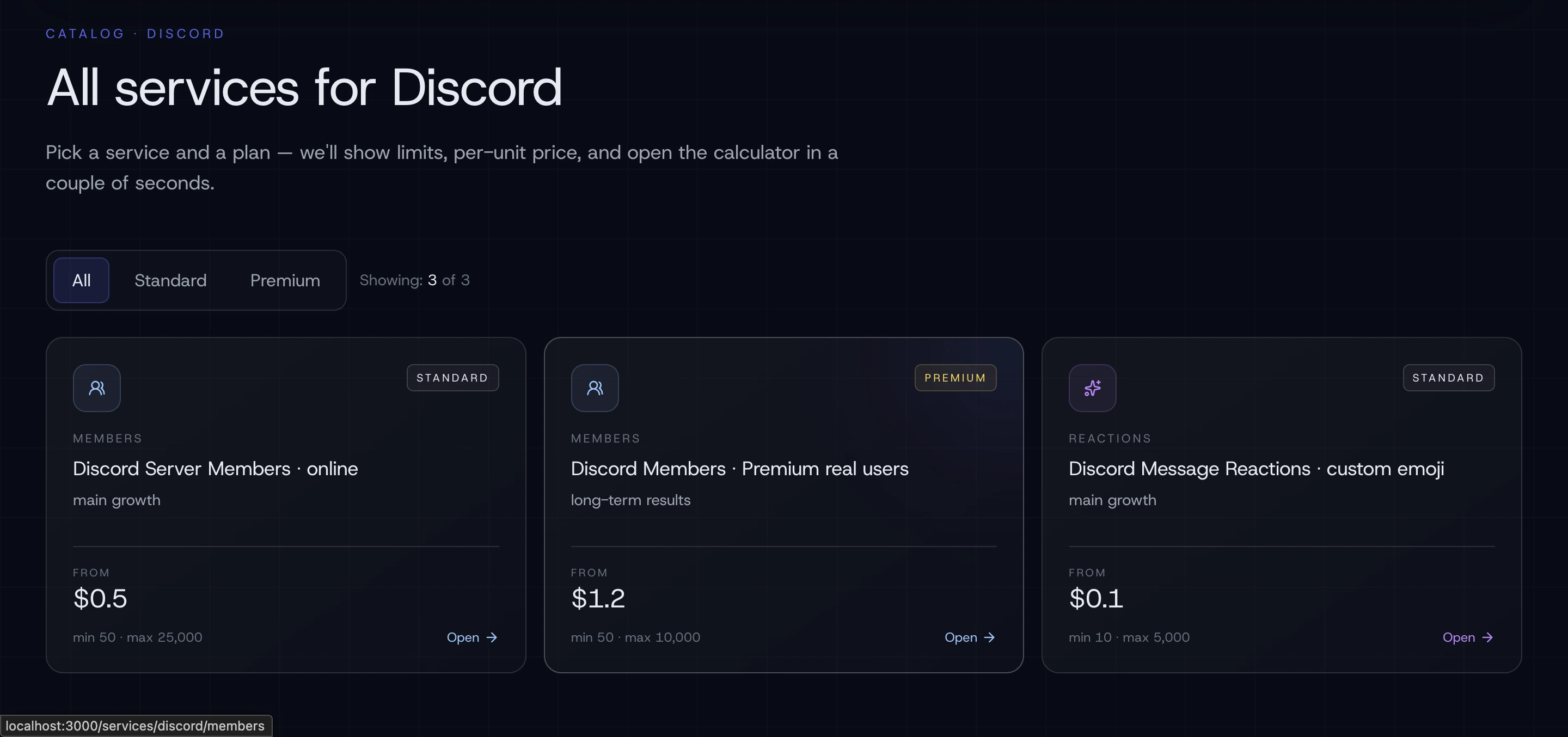
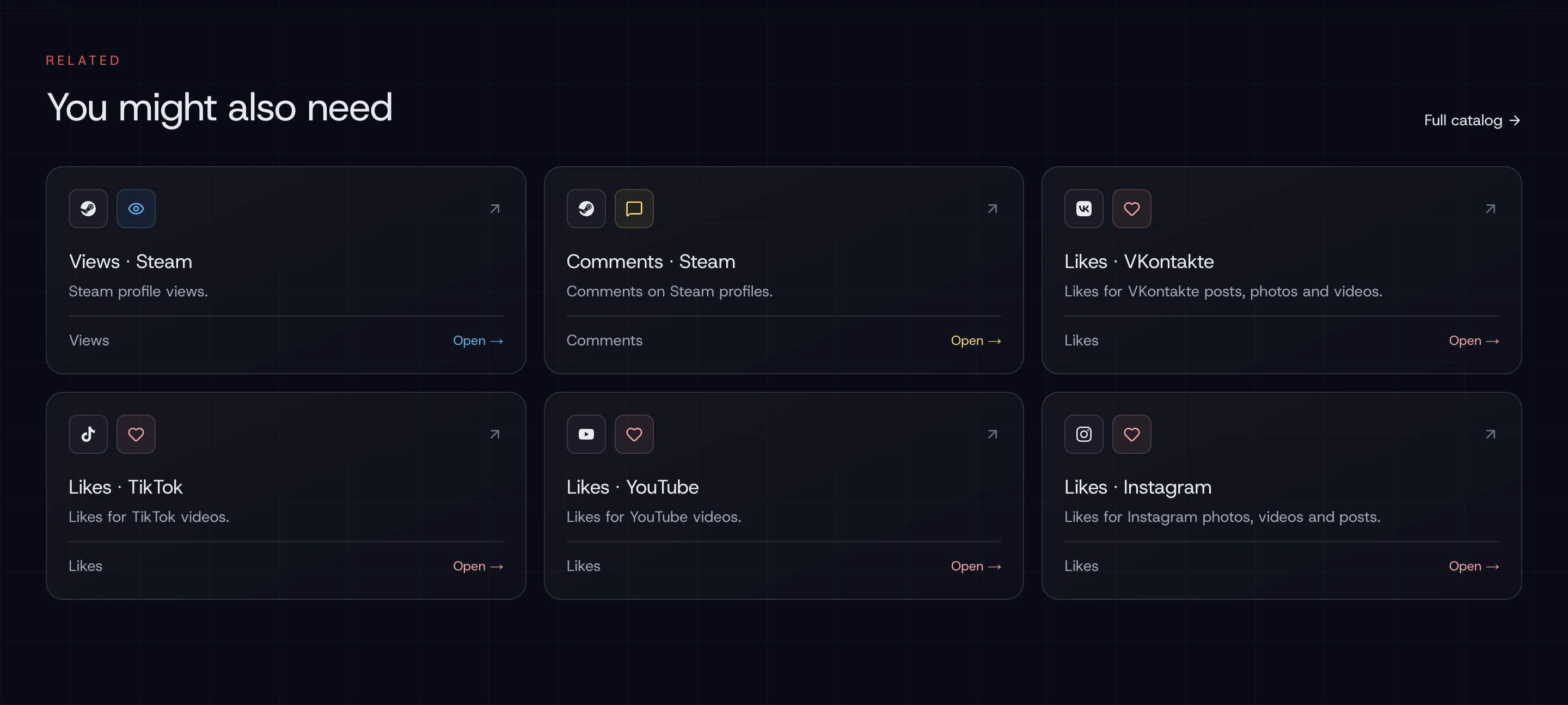
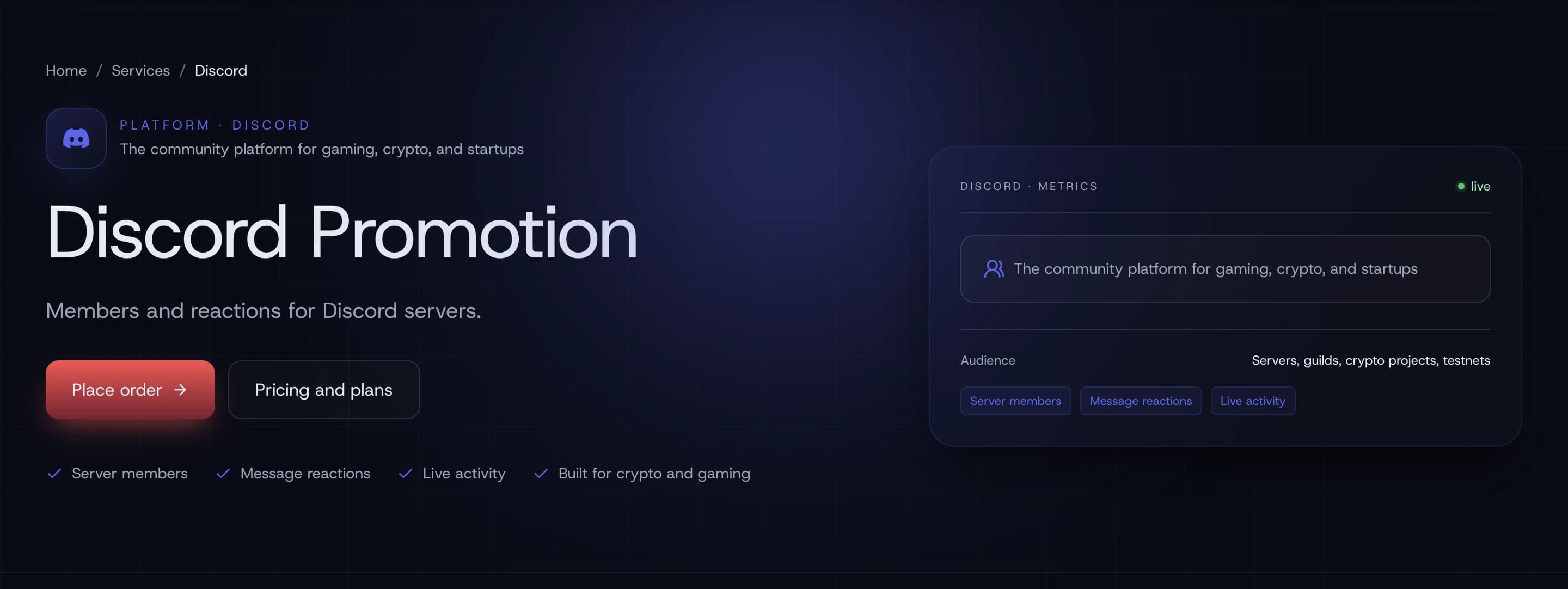
- Public marketing site with platform-specific landing pages and a structured service catalog (server-rendered, sitemap-indexed).
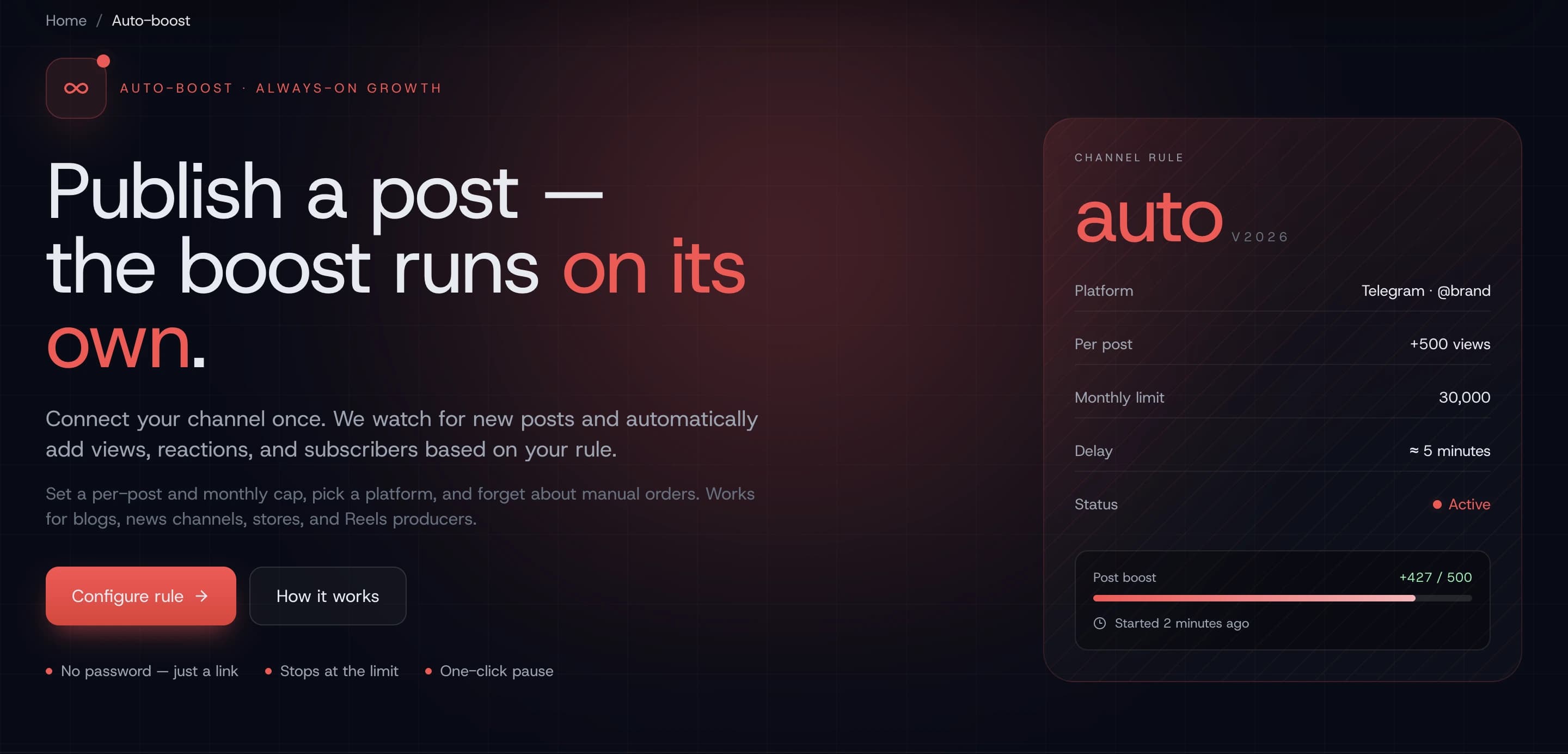
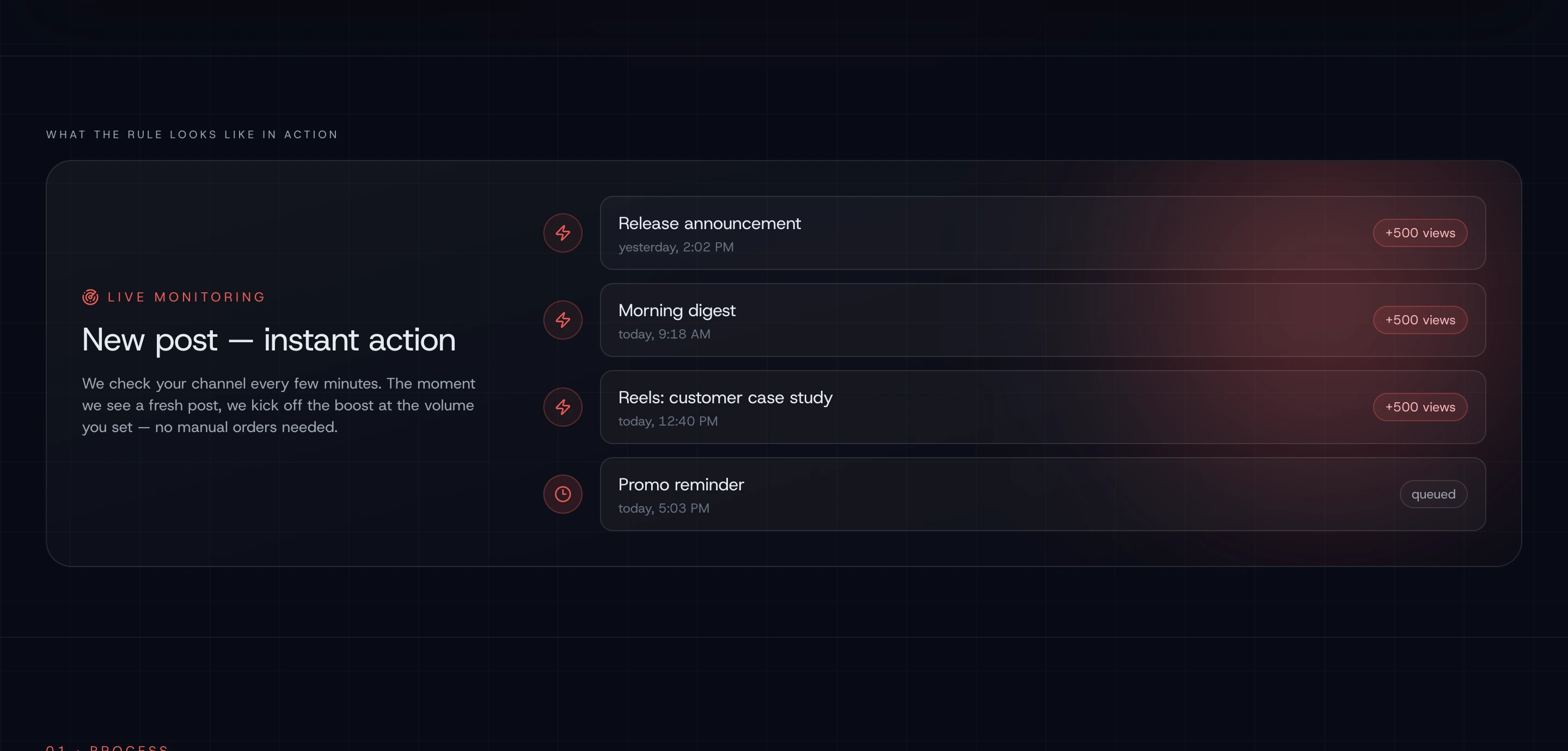
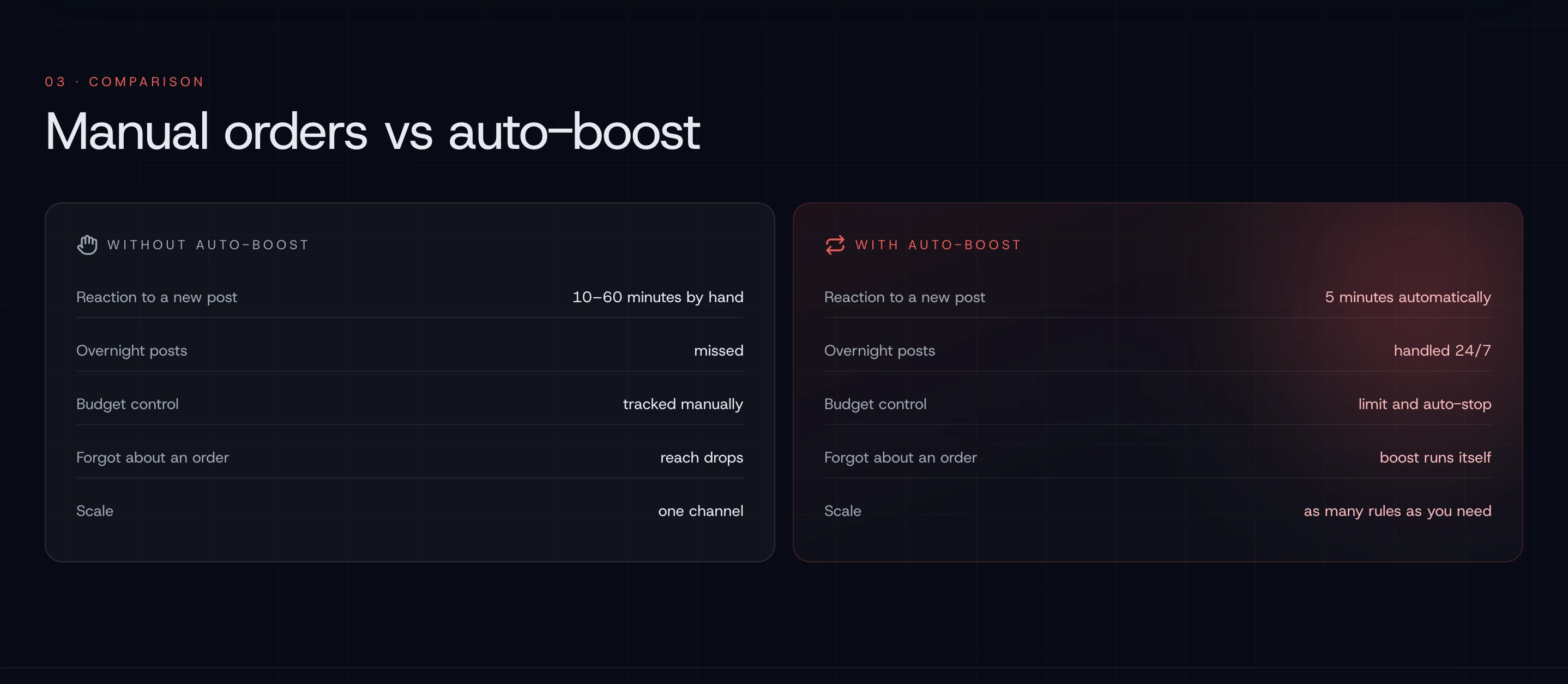
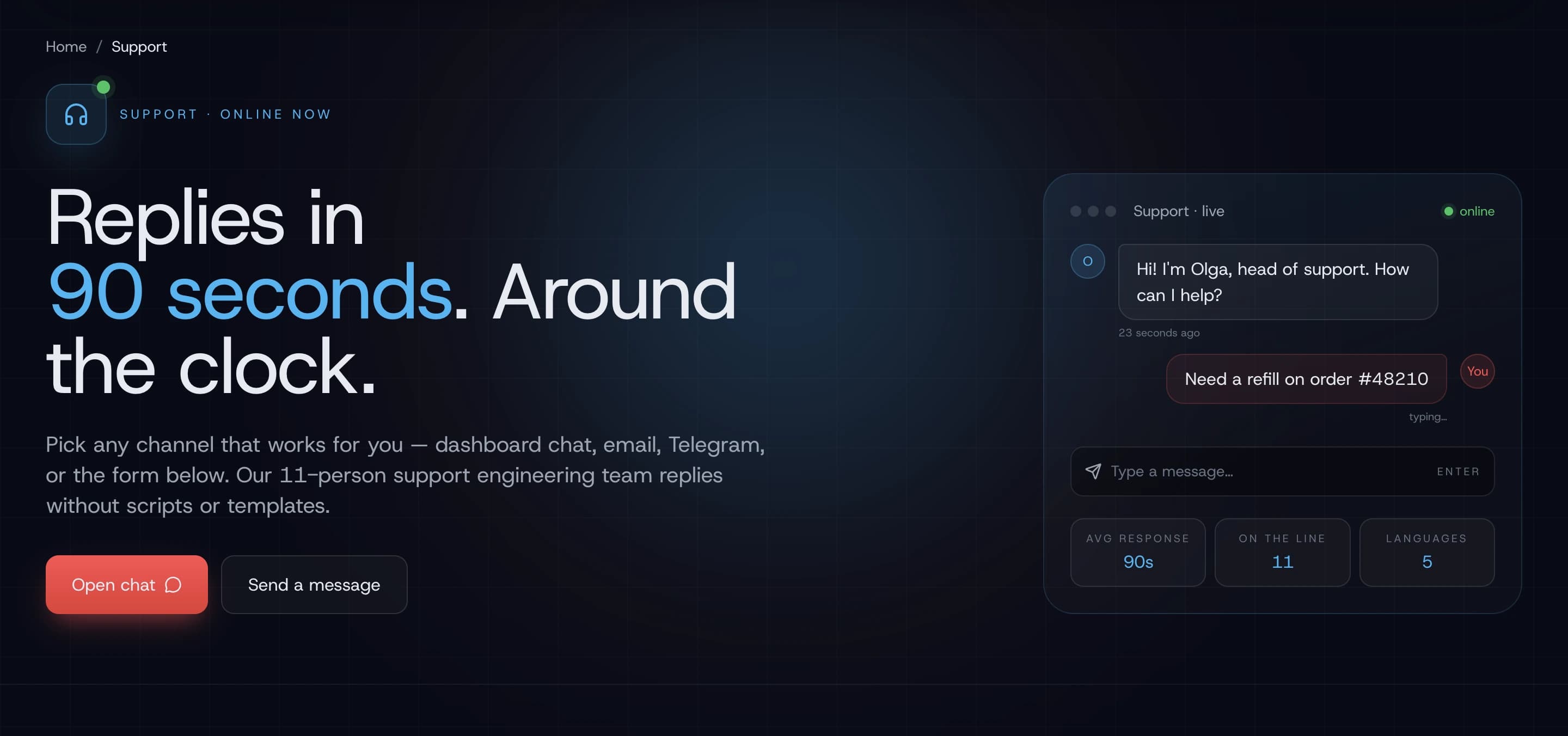
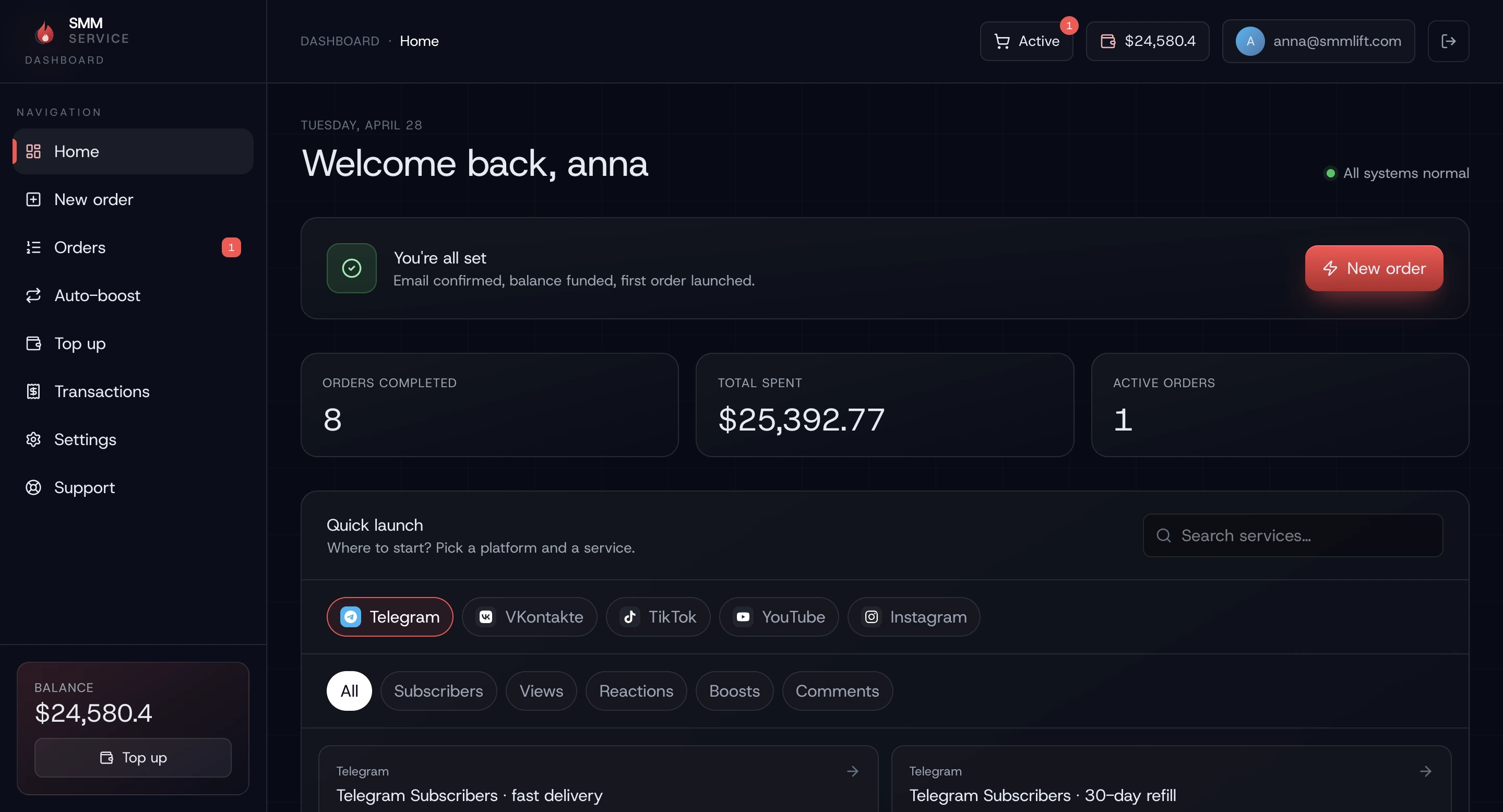
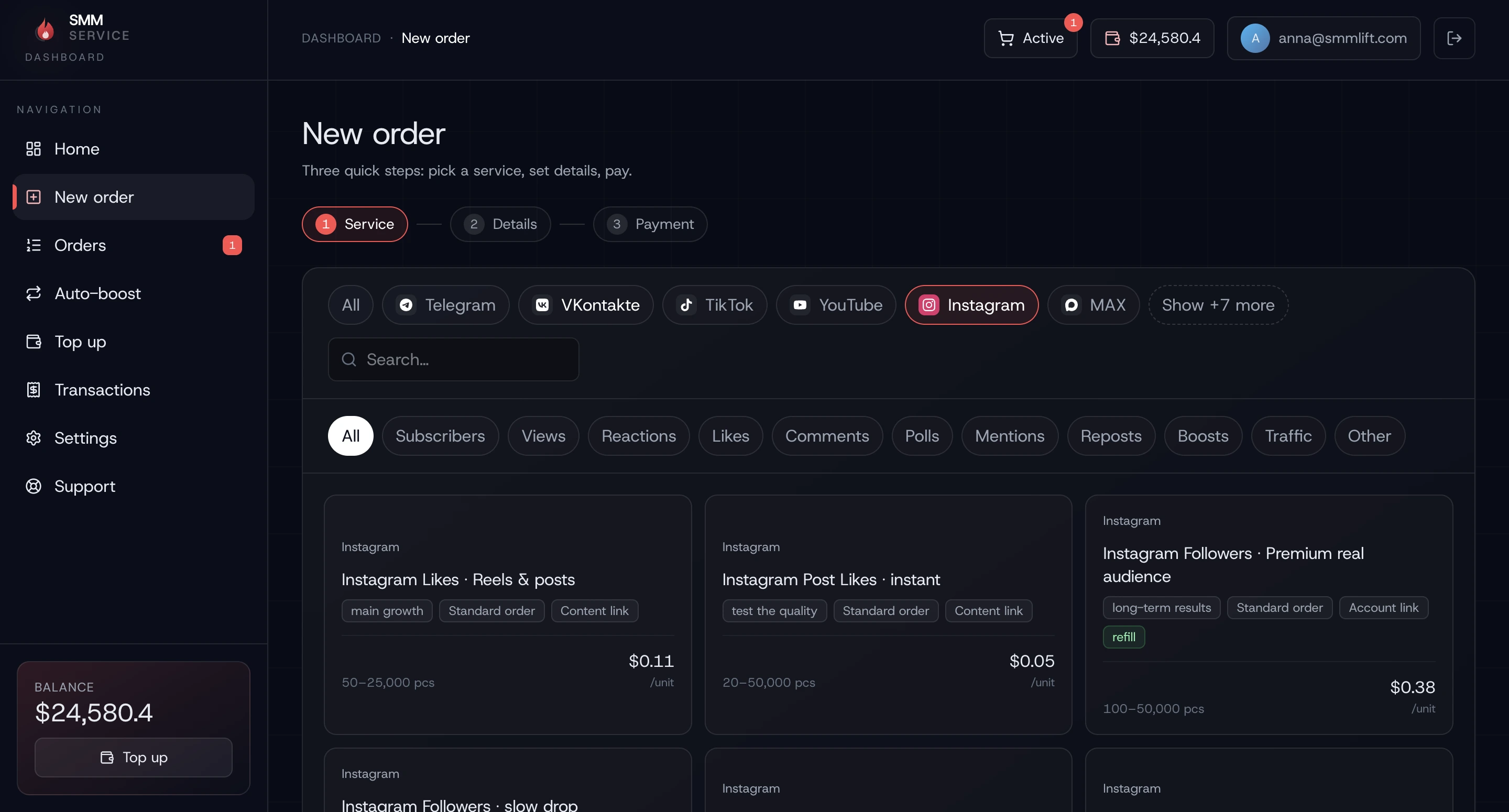
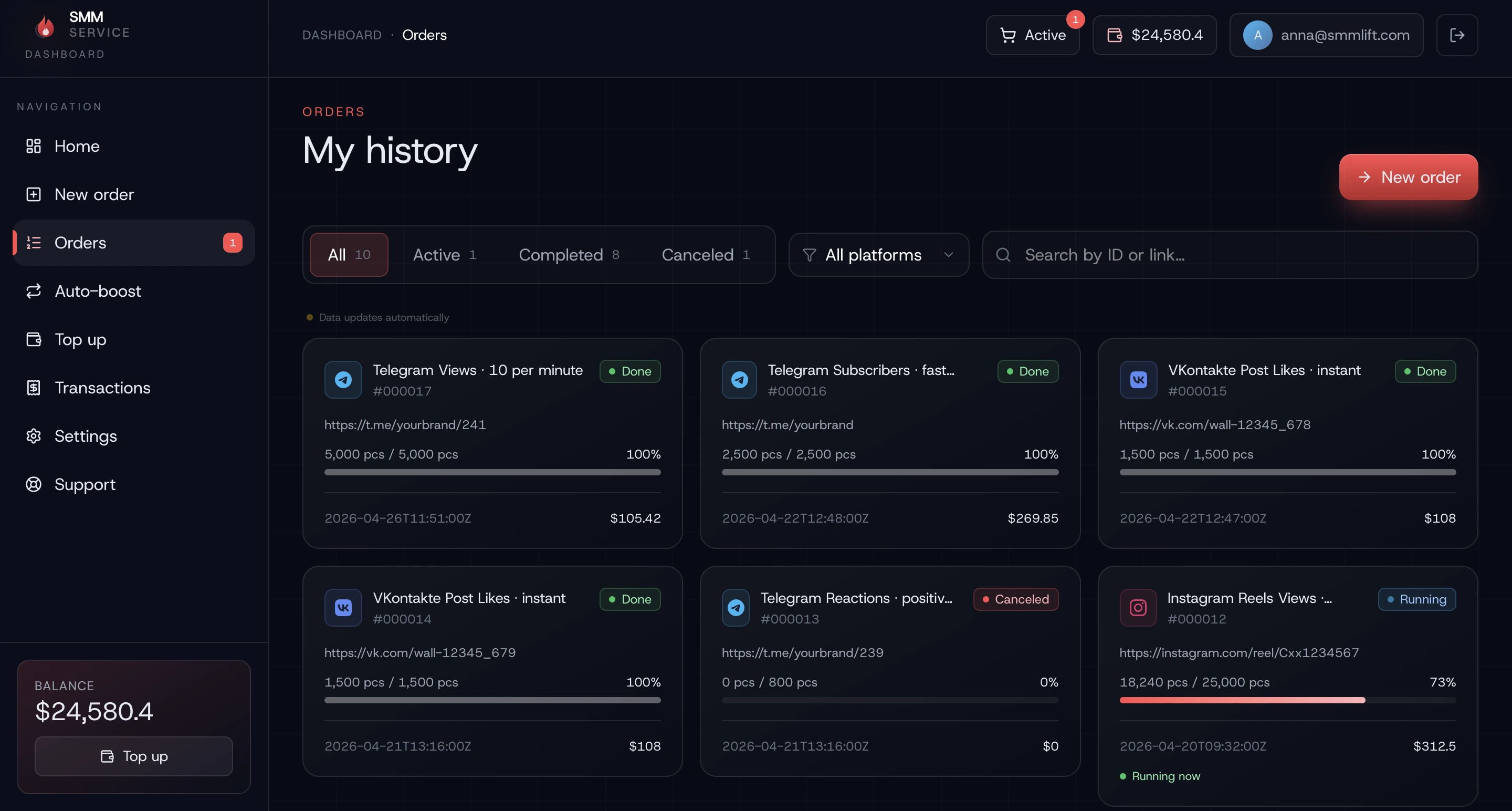
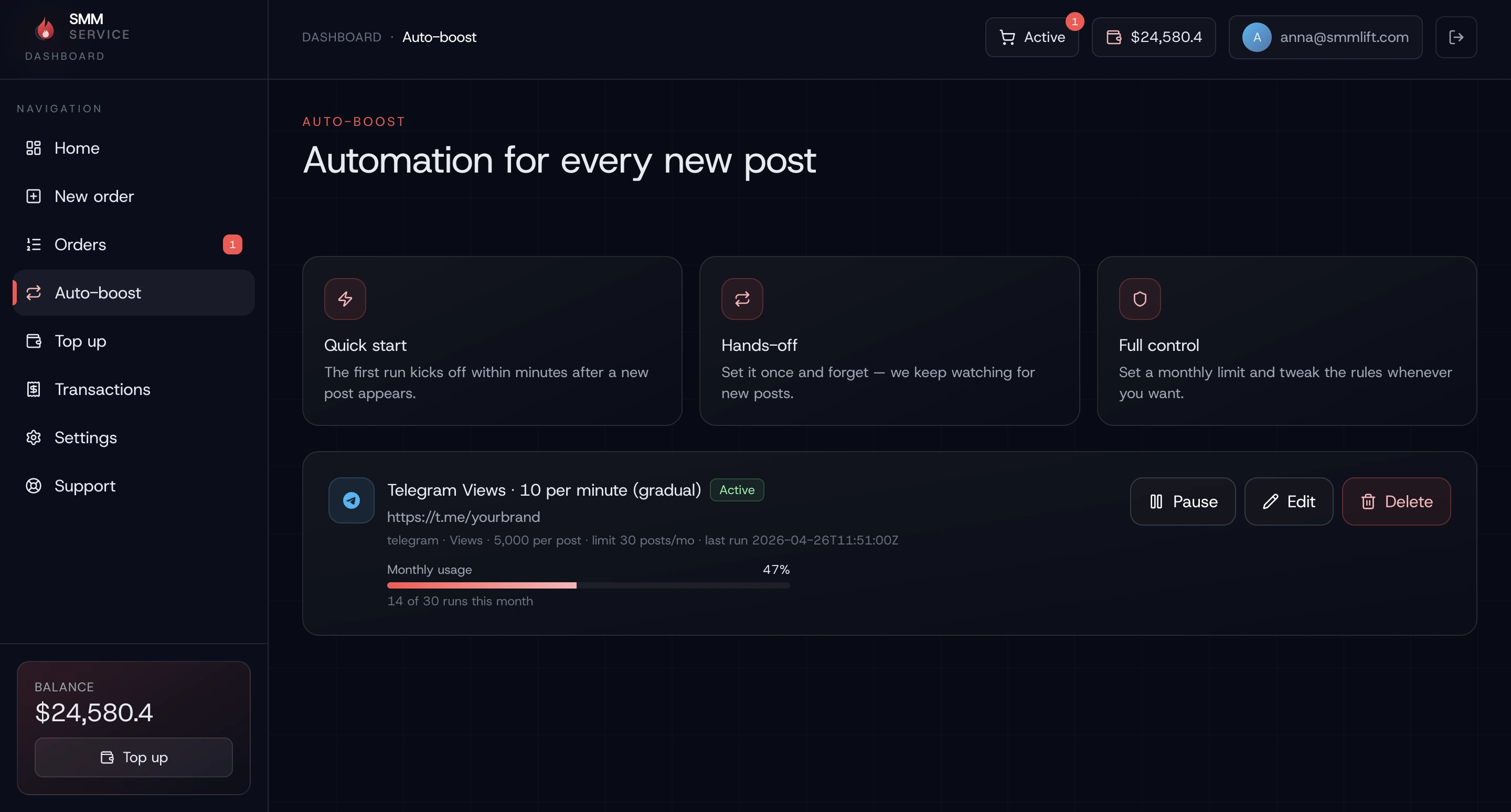
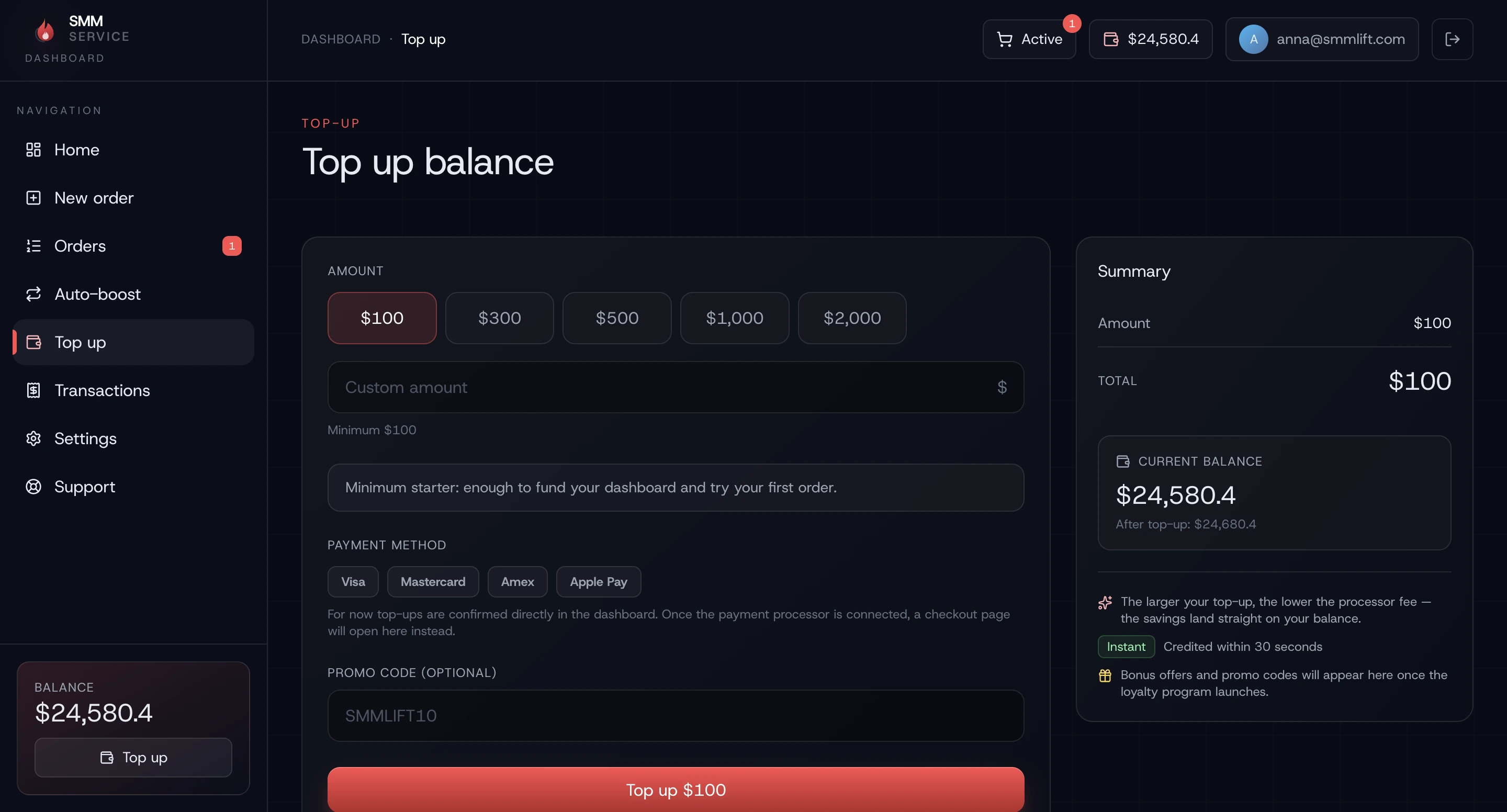
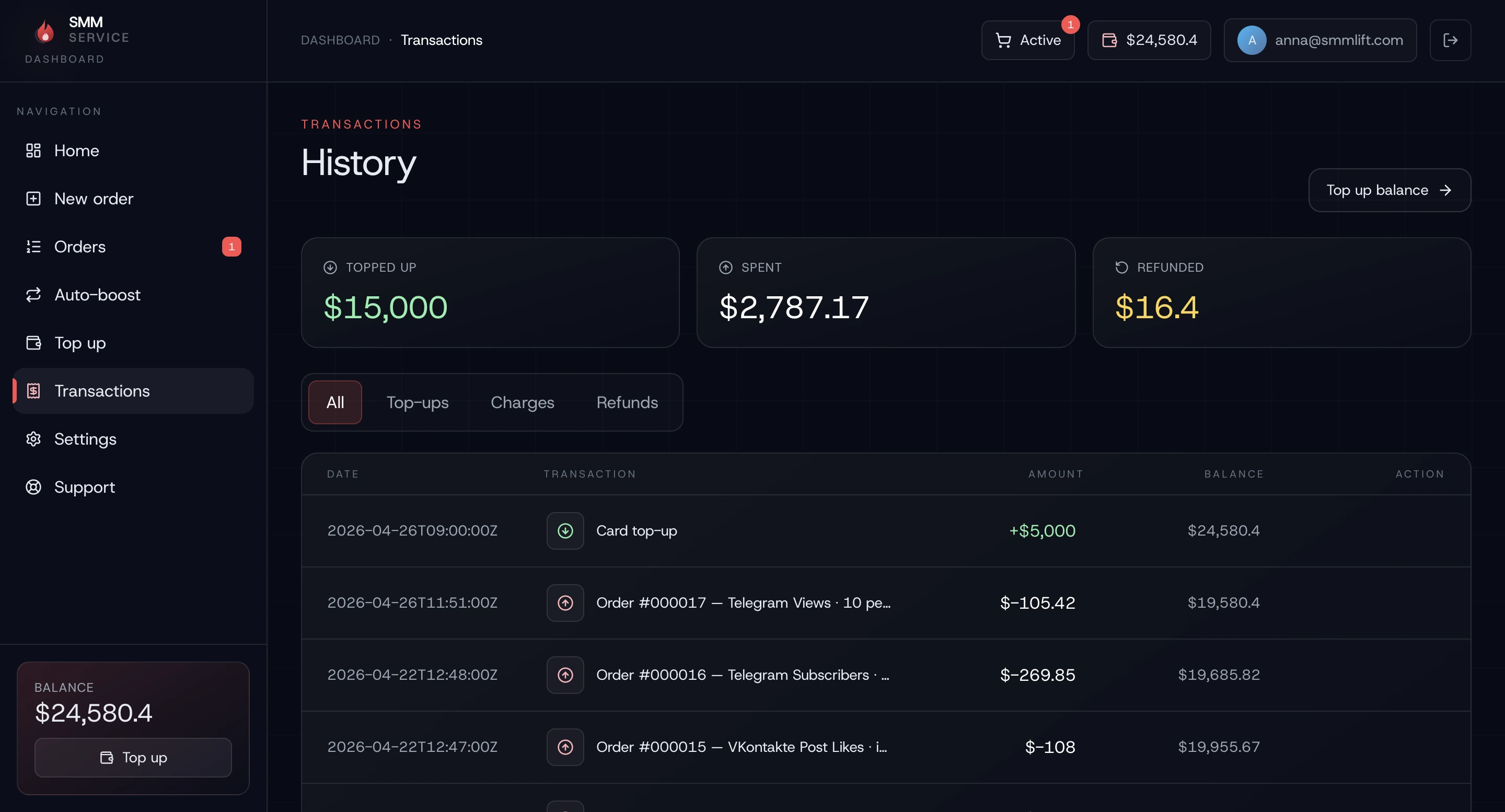
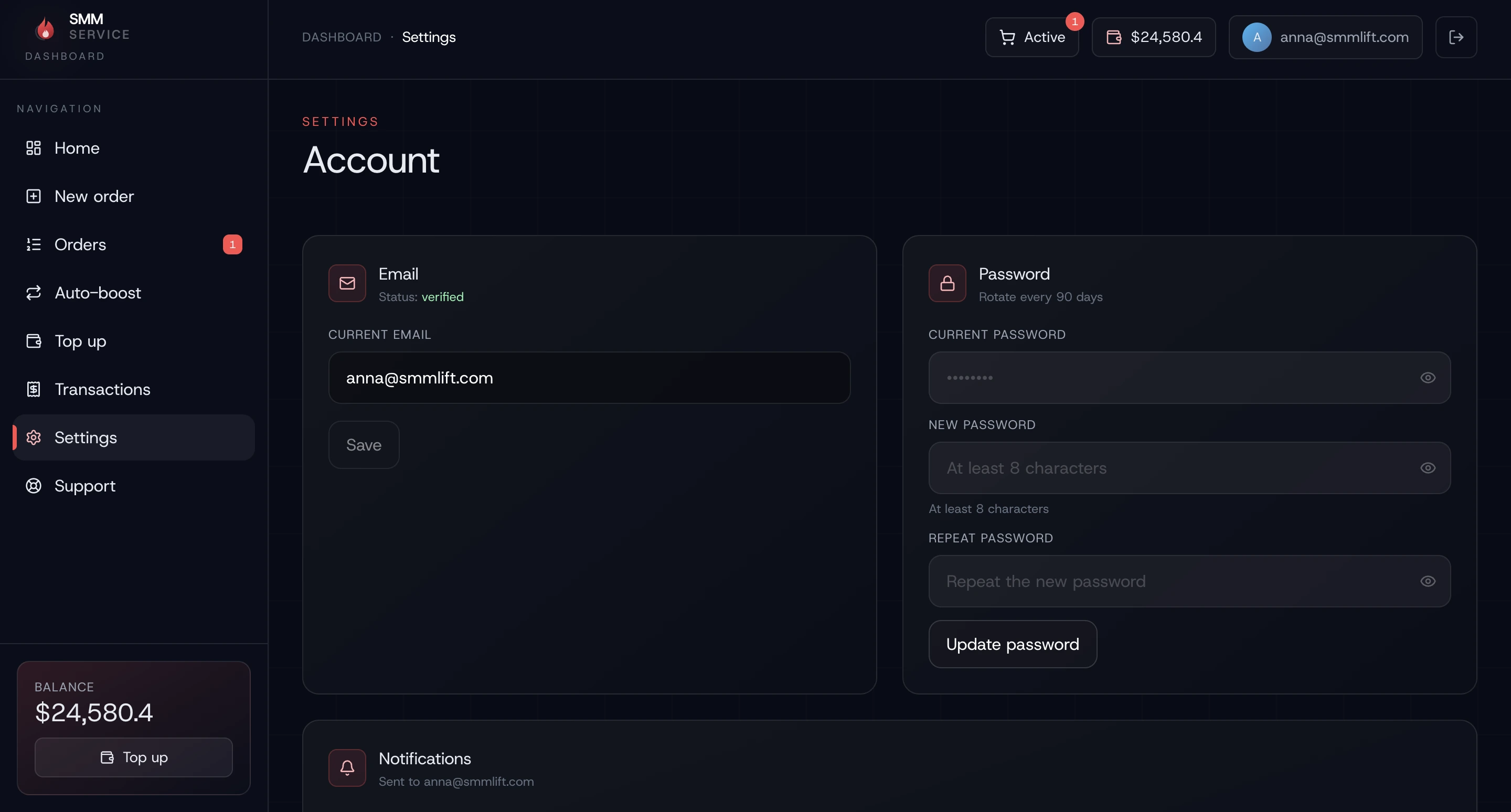
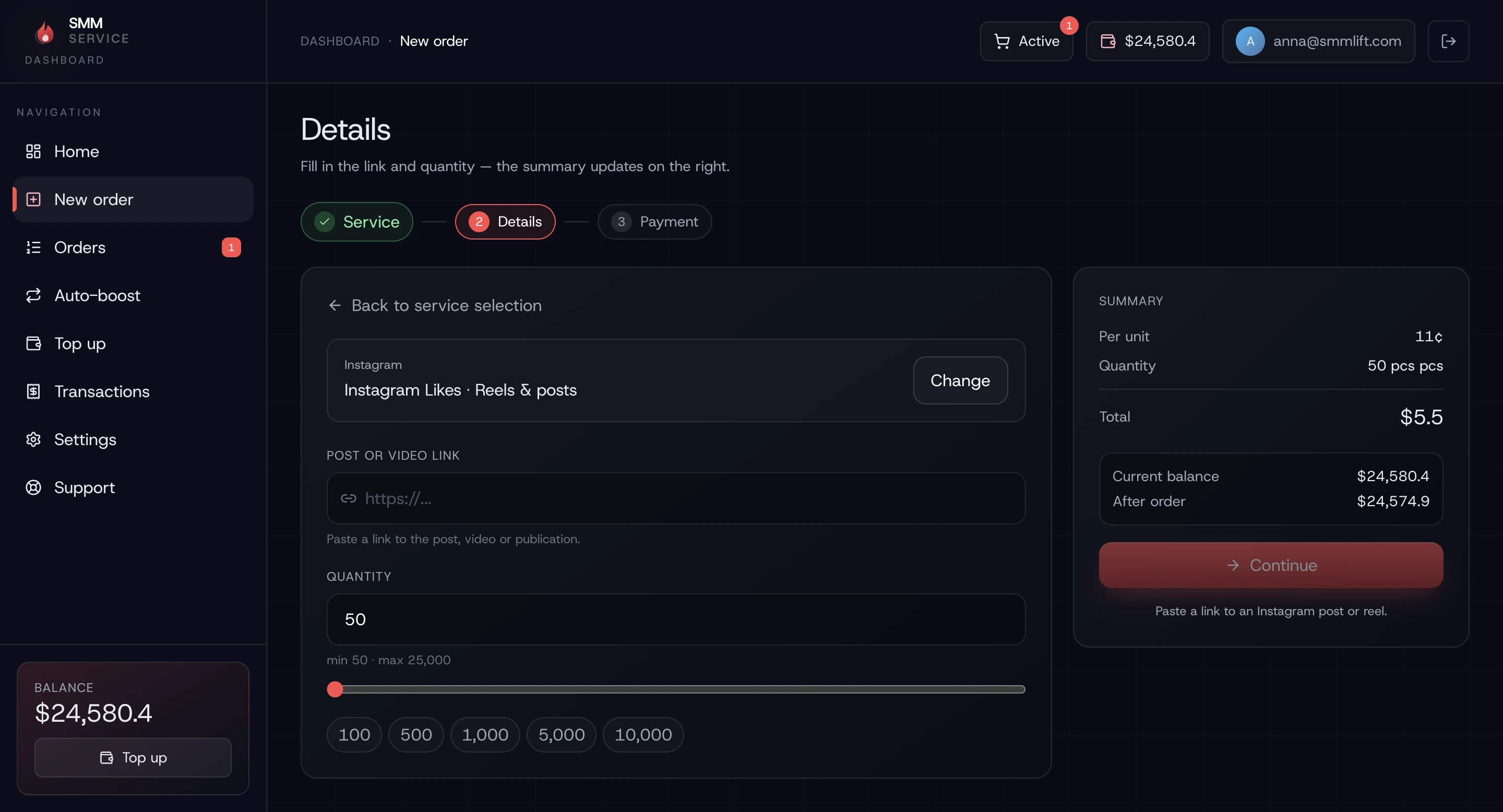
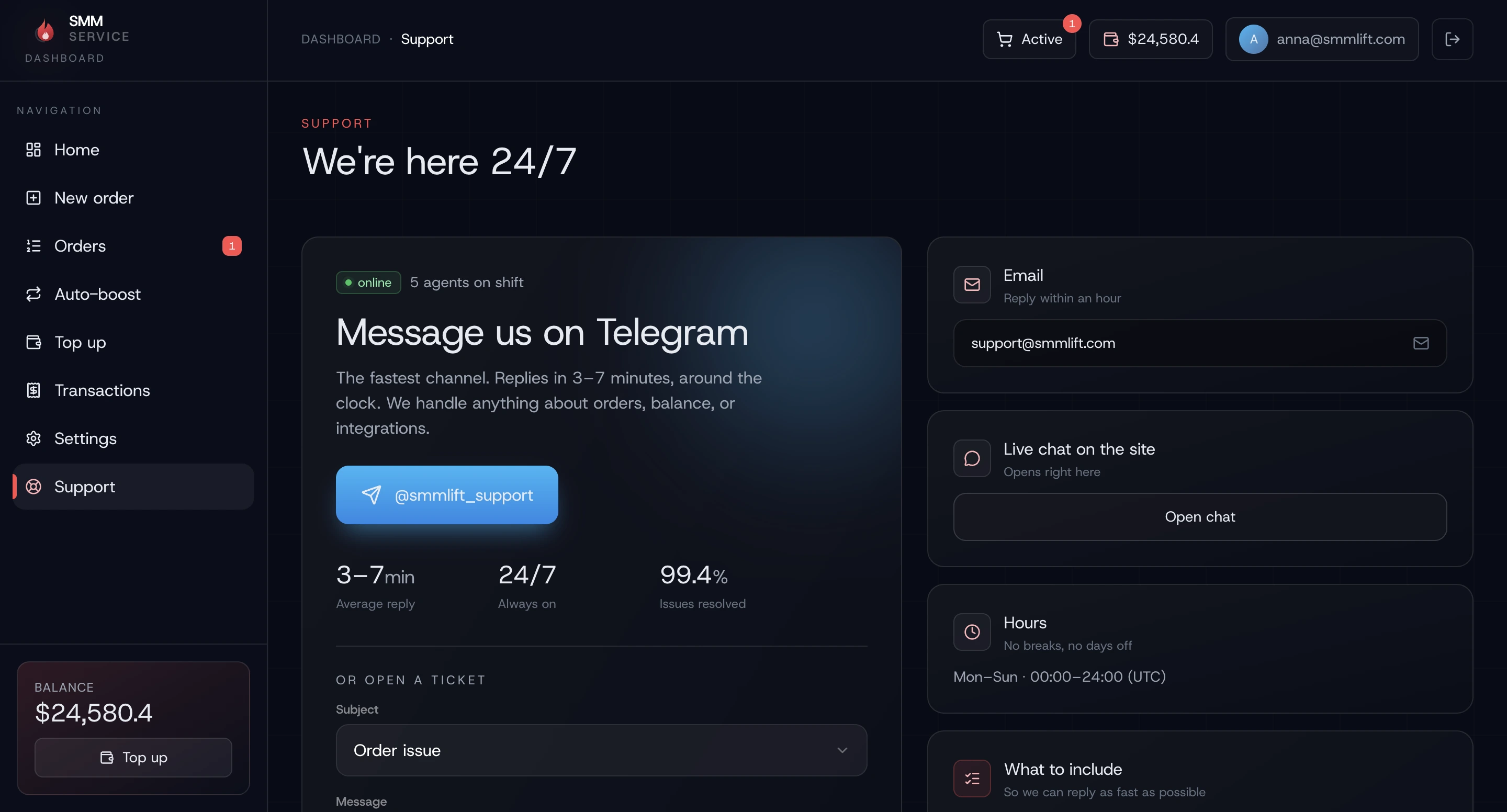
- Customer dashboard with order flow, balance top-up, transaction history, service adjustment requests and recurring order rules.
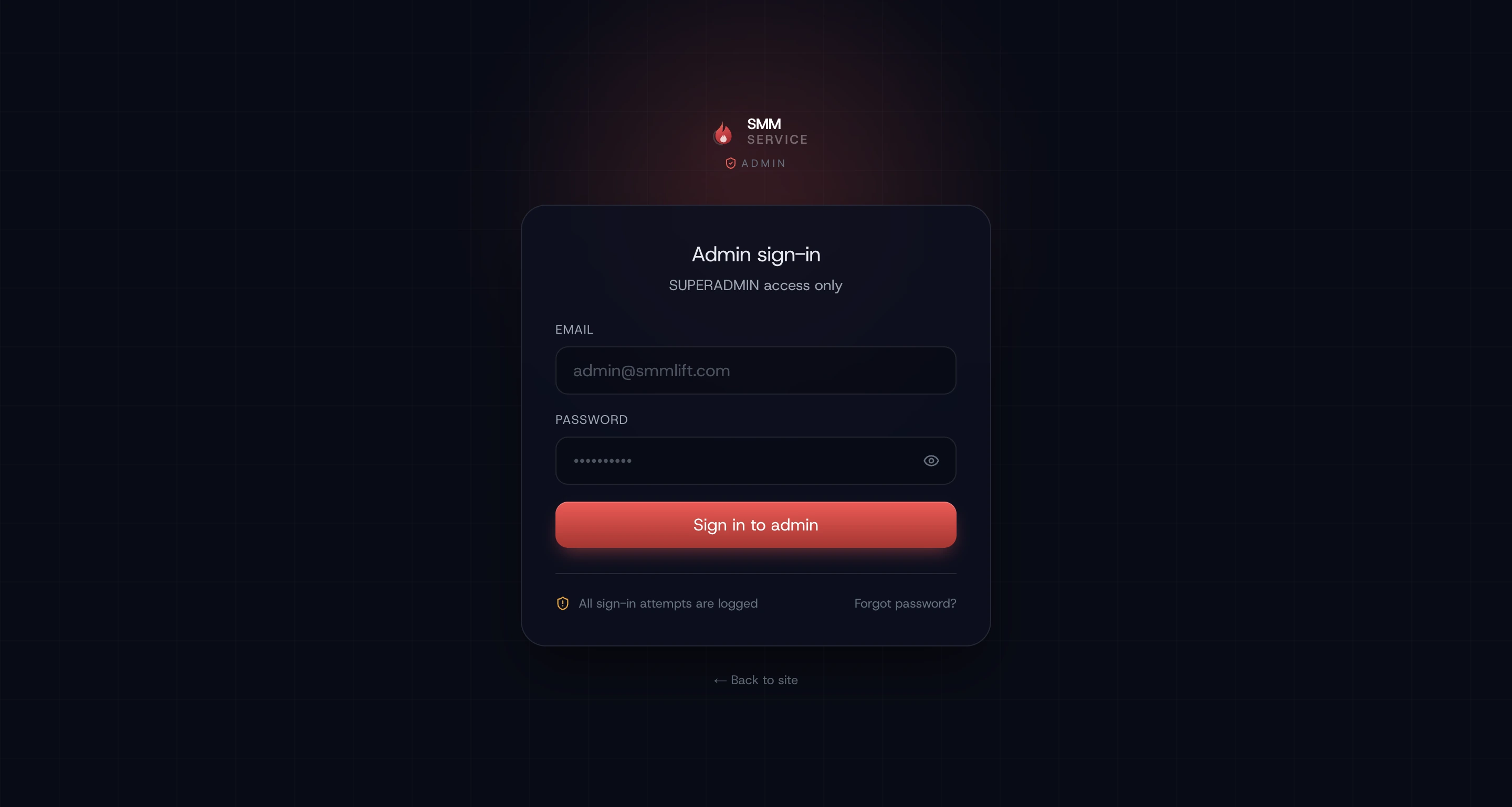
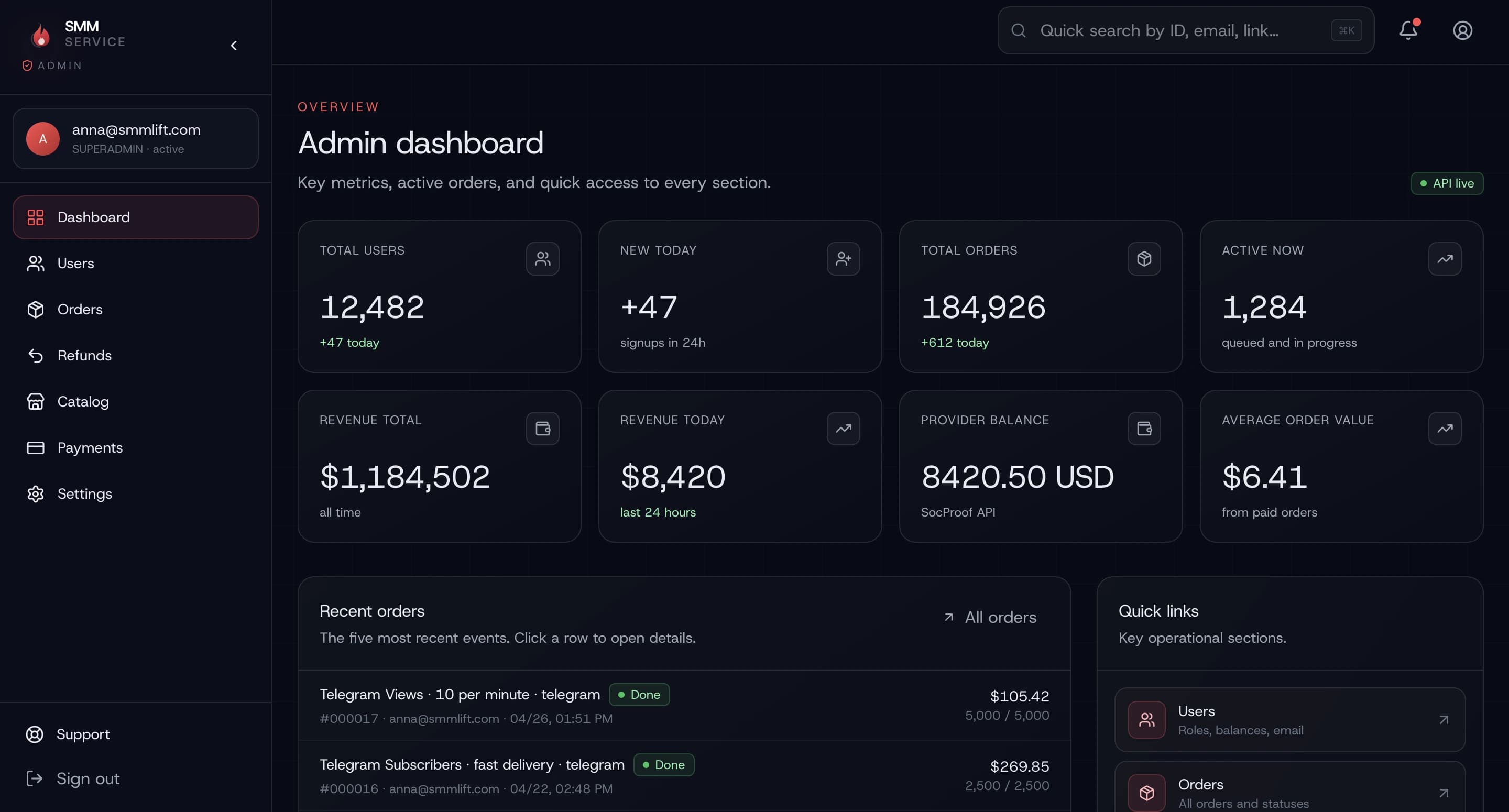
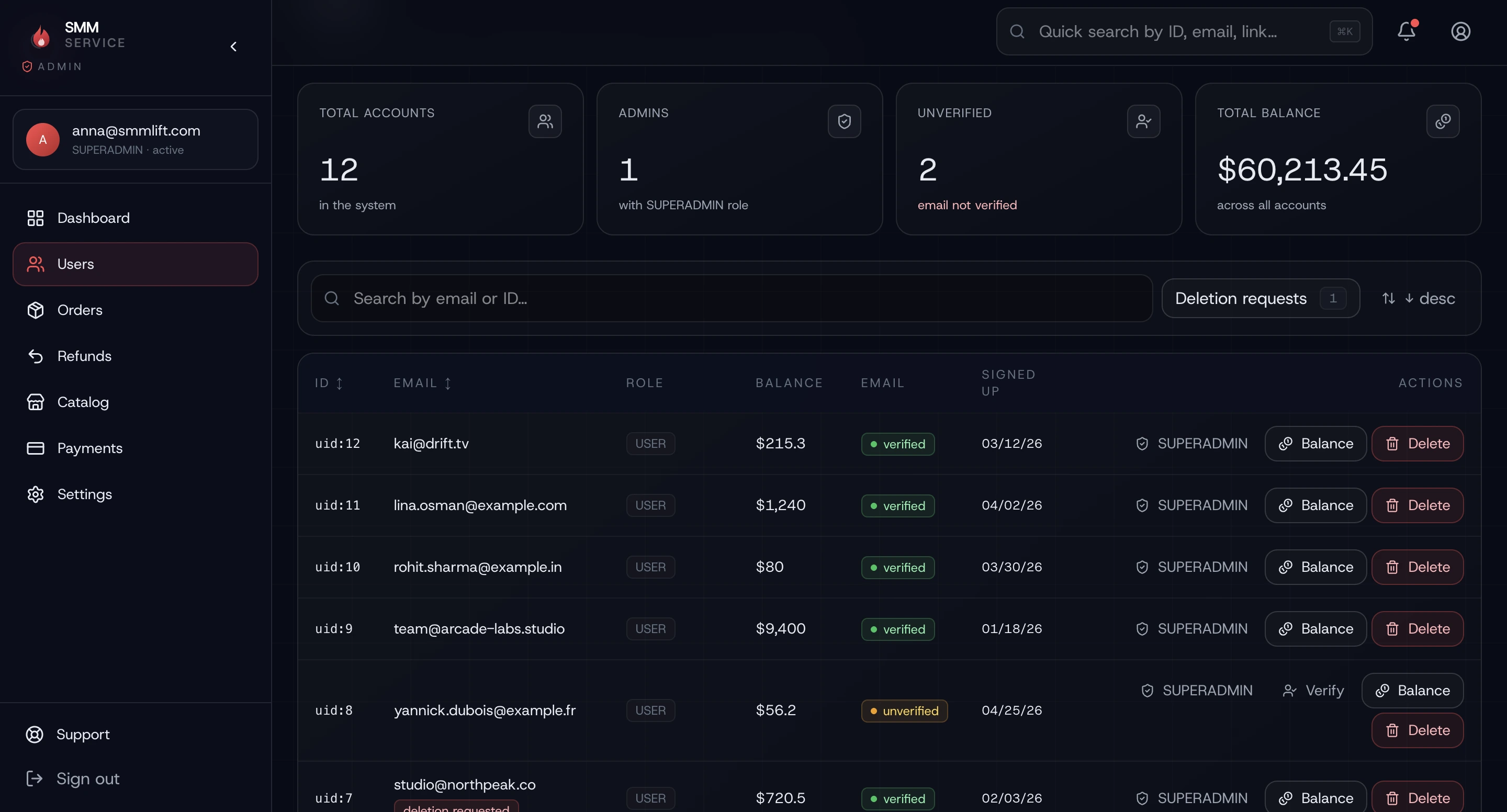
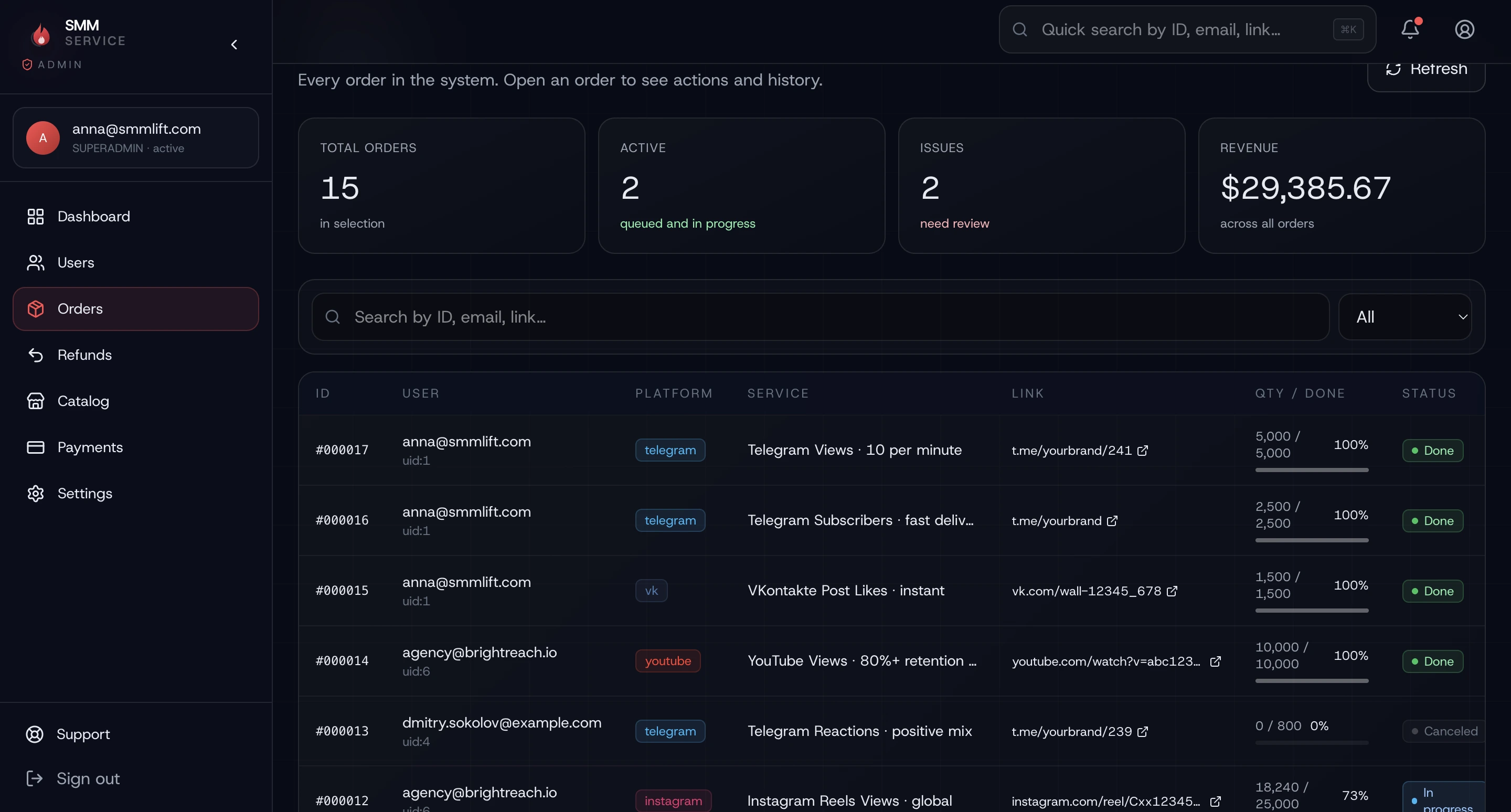
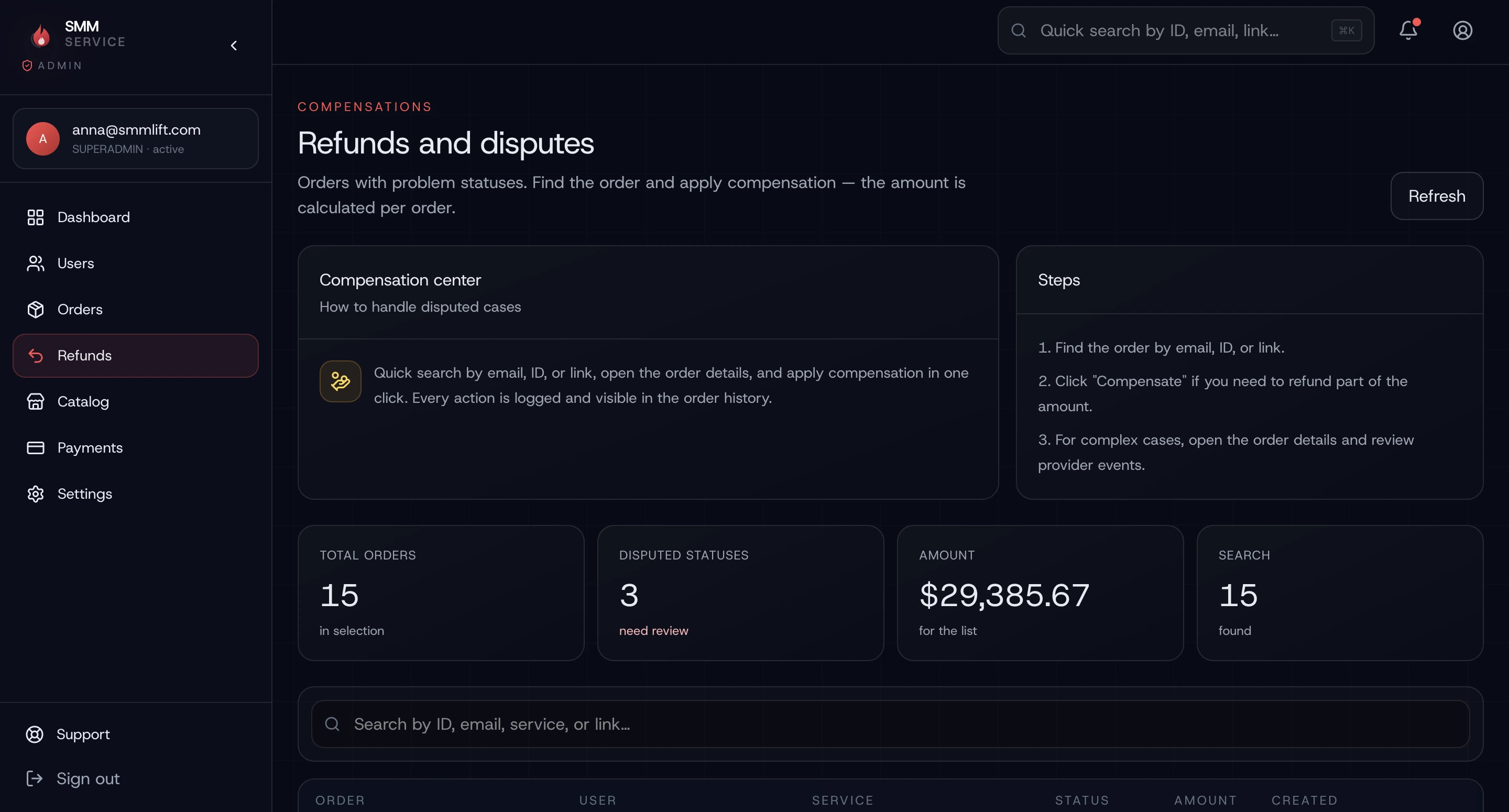
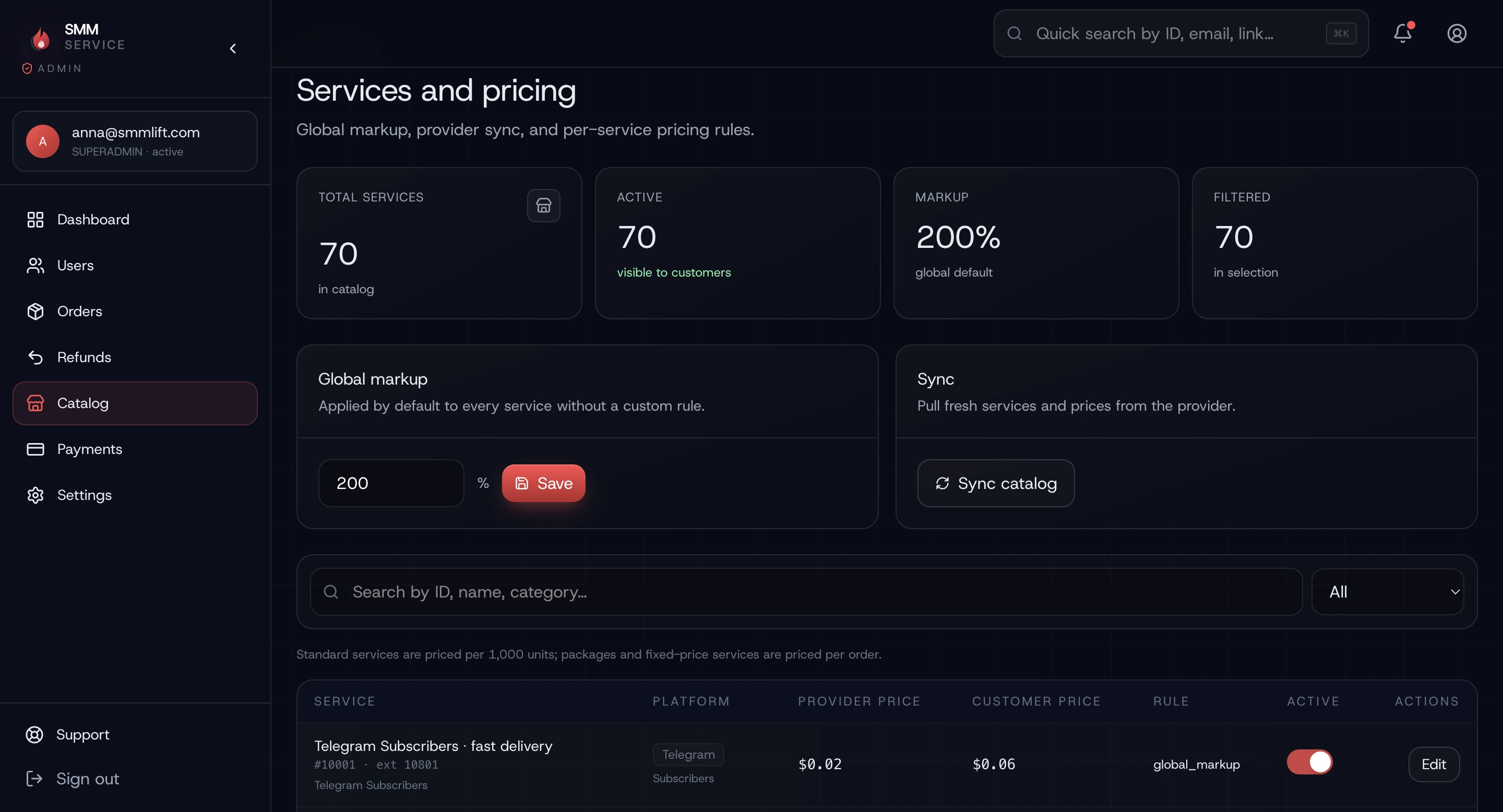
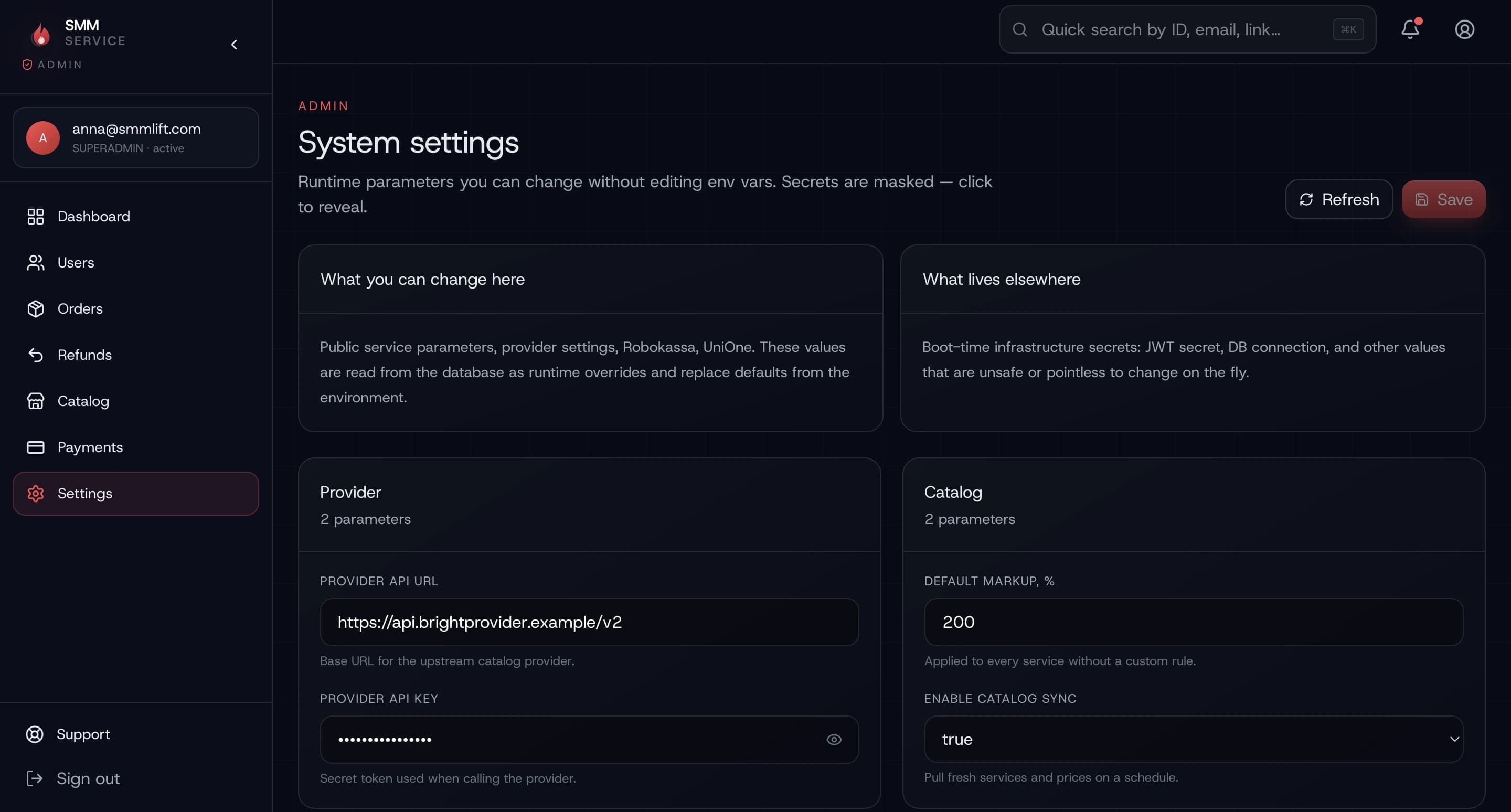
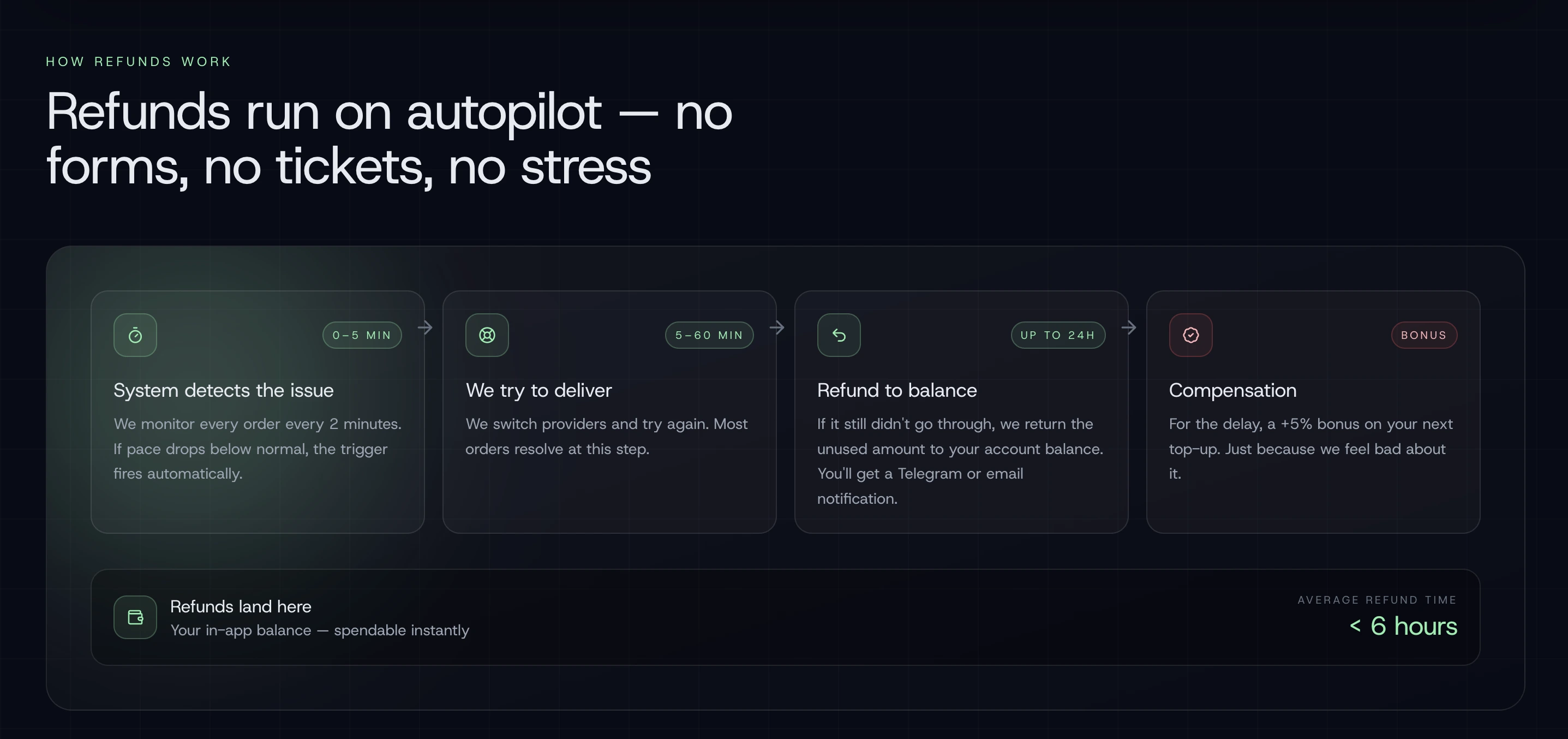
- Admin console with catalog sync, pricing overrides, user management, order intervention (cancel, compensate, refund) and audit trails.
- Provider catalog layer that ingests upstream listings, normalises service records and exposes them through one read API.
- Payment and refund workflows with idempotent processing and review gates for sensitive cases.
The platform lets the operator scale the service catalog without engineering involvement: new providers, new services and new pricing rules are configured through the admin console, and the customer-facing site rebuilds the relevant pages on the next request.
Architecture
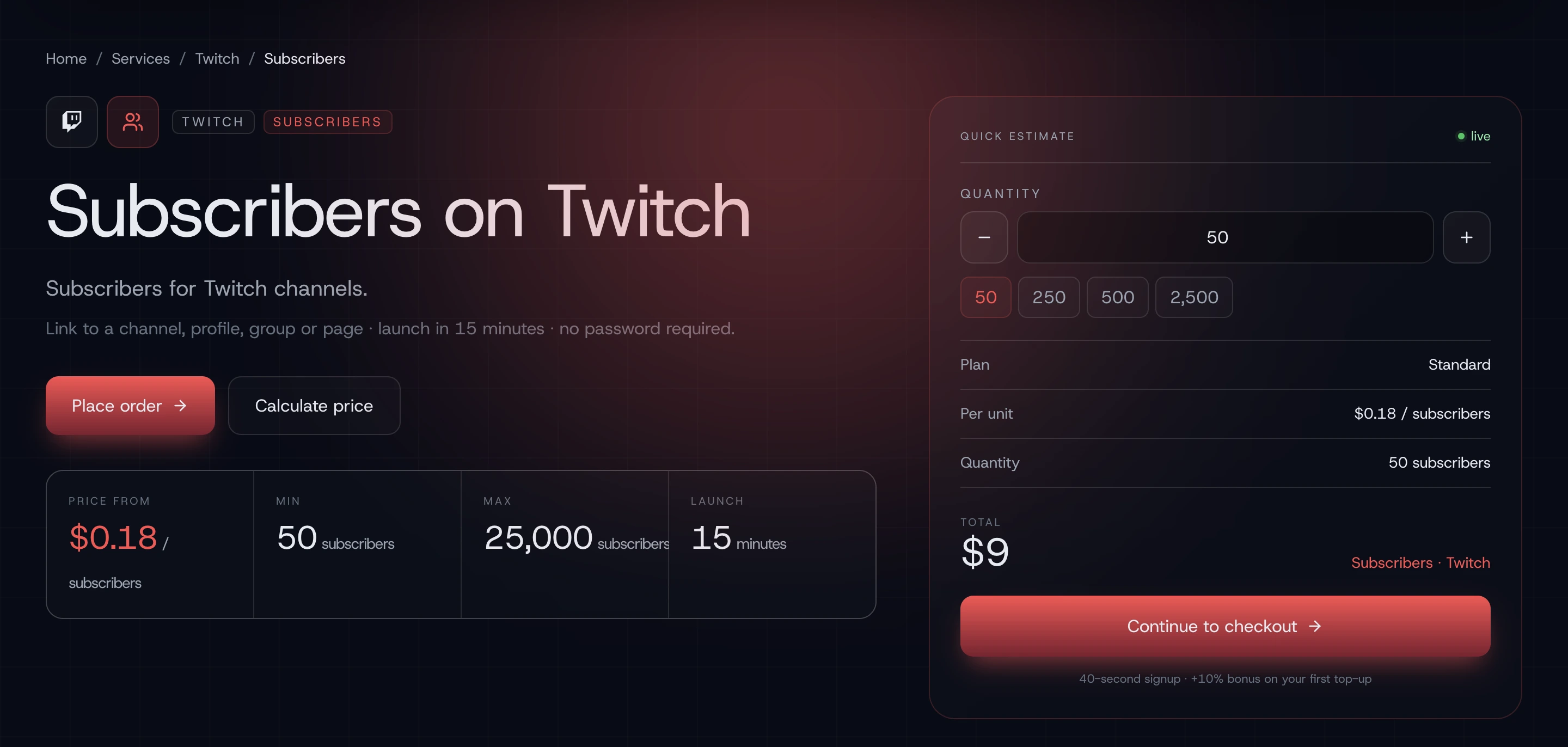
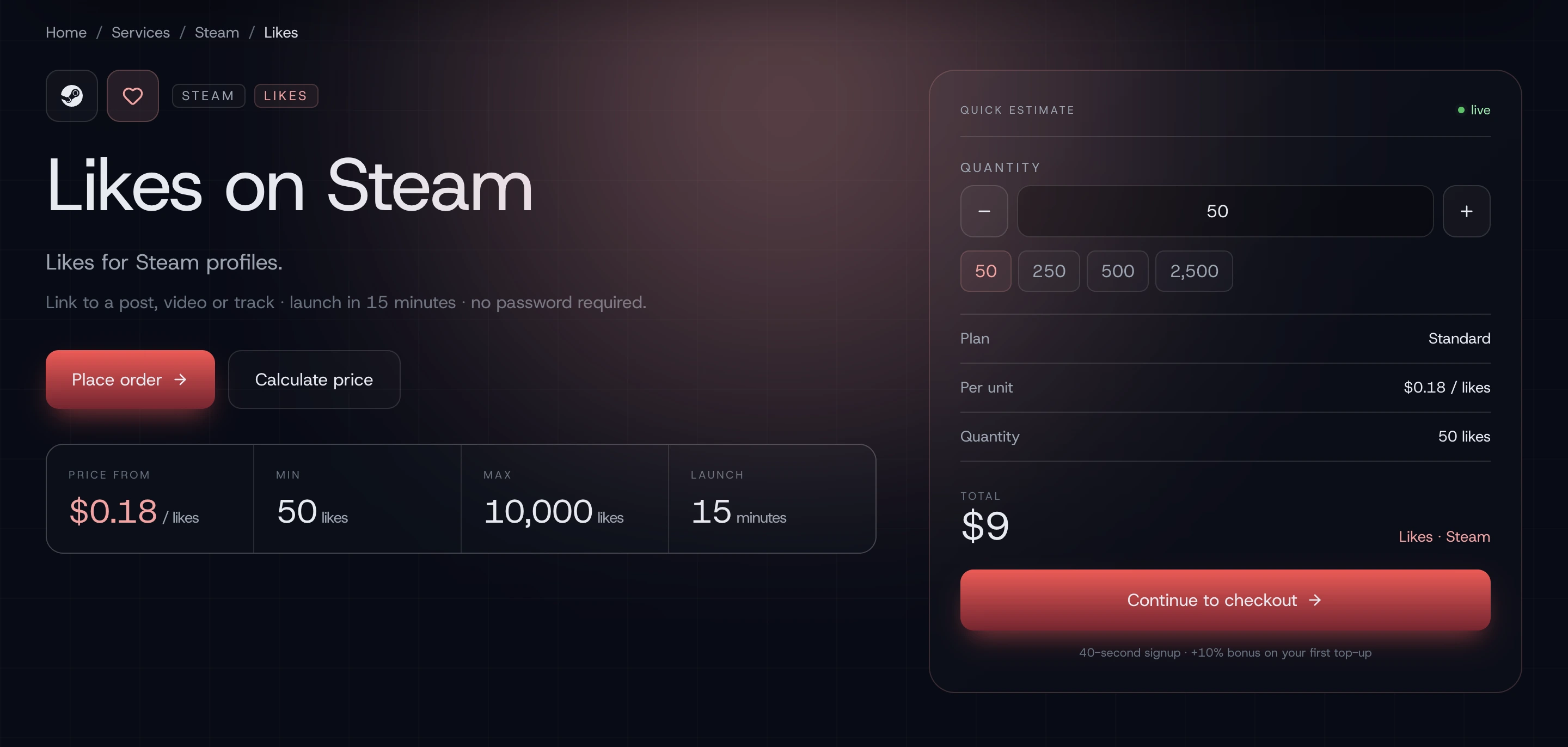
Backend — Java with Spring Boot, PostgreSQL, Redis and a job queue for asynchronous provider sync, refund processing and order polling. A strictly typed REST API with role-based access enforced at the controller layer; per-endpoint audit interceptors capture every state-changing call. Frontend — Next.js, React and TypeScript across marketing site, dashboard and admin console. Server-rendered marketing pages for SEO; authenticated dashboard and admin flows for live operational data. The admin console is a separate route segment behind an authentication guard. Catalog & pricing — a single canonical registry maps every upstream provider service to a (platform, service kind, plan) tuple. The pricing engine accepts global markup, per-service overrides, fixed-price packages and bundle-level multipliers; quotes are computed server-side and signed before being shown in checkout, so client-side tampering cannot mismatch the actual charge.
Operator Controls & Traceability
The platform does not decide the operator's legal or policy obligations. Instead, it provides technical controls that make operational decisions configurable and reviewable:
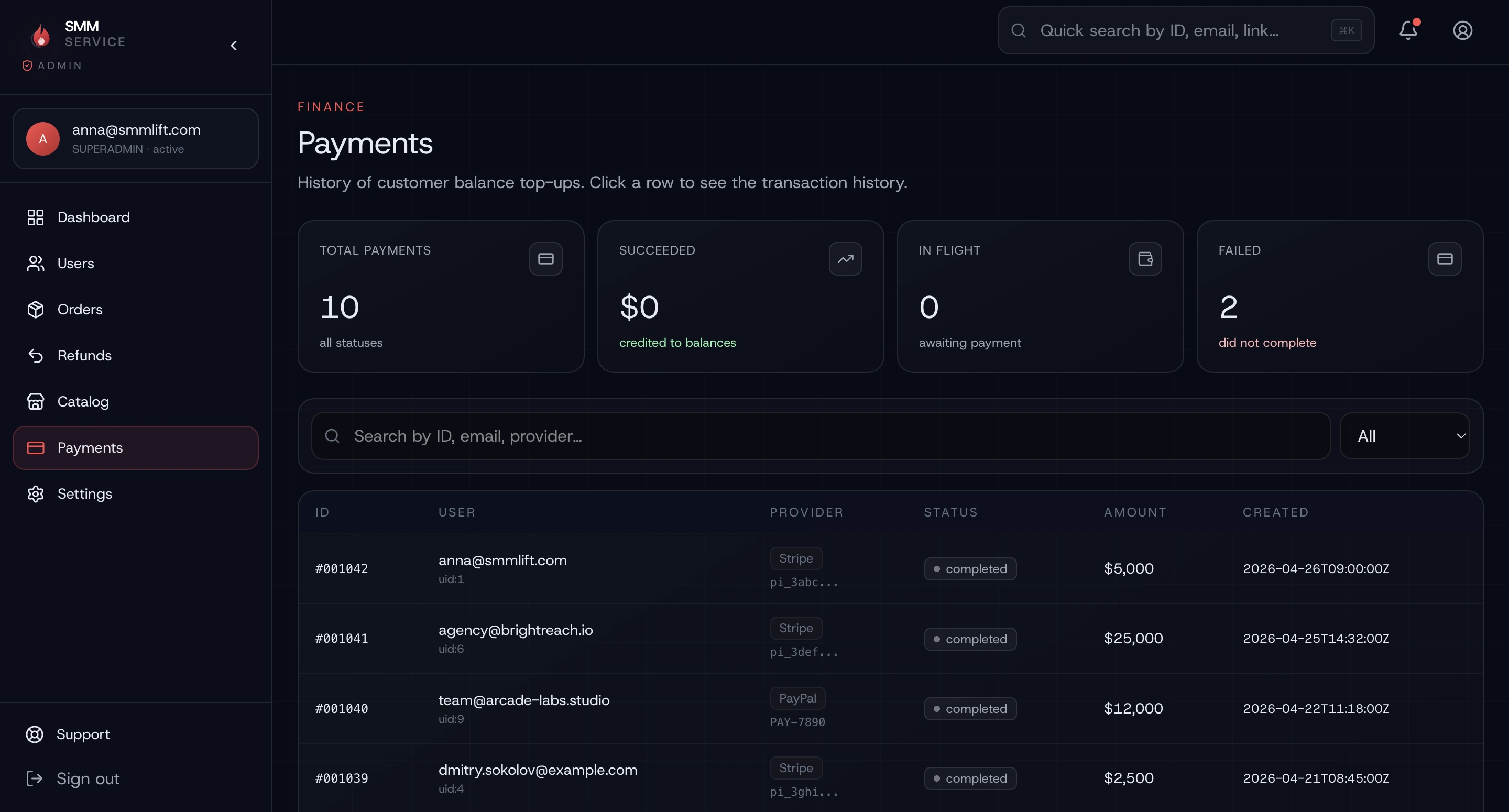
- Audit log for charges, refunds, balance top-ups and admin overrides, queryable by user, by order and by time window.
- Idempotent payment and refund operations keyed by external payment IDs to prevent double charges or double refunds.
- Configurable checkout notices where specific services require additional information.
- Account deletion request flow with configurable retention handling.
- Role-based access control for superadmin, admin and support roles, with a separate audit feed for sensitive actions.
This keeps operational rules visible in the admin system instead of hiding them in hardcoded business logic.
Engineering Highlights
A canonical service registry maps upstream provider records into one internal model. The provider-sync layer ingests an upstream catalog that drifts weekly — services renamed, deprecated, repriced or split into new variants. A deterministic matcher maps each upstream entry to (platform, service kind, plan) using a tunable rule set, so a large share of routine catalog changes flow through without manual intervention; only edge cases land in the admin review queue. The pricing engine separates provider cost from customer price and supports global, category, service and bundle-level overrides. Quotes are calculated server-side and signed before checkout, so the price shown to the customer matches the amount charged. The admin console is built for sustained operator use: a searchable catalog of 1,200+ service records, keyboard-friendly modals for pricing and balance adjustments, optimistic UI for low-stakes actions and an explicit confirm dialog for anything that moves money or status.
Project Context
This was a single-vendor delivery: from initial scope through architecture, full implementation, infrastructure setup and operator handover. We present this case as an engineering portfolio piece — to illustrate how we structure multi-surface SaaS products, separate operator concerns from product surface, and design backend primitives that let operators absorb upstream churn without breaking the customer-facing experience.
What We Delivered
- Java Spring Boot backend (REST API, PostgreSQL, Redis, job queue, audit middleware).
- Marketing site with platform-specific landing pages, service catalog and SEO-tuned service detail pages.
- Customer dashboard: order flow, balance, transactions, support, service adjustment requests and recurring order rules.
- Admin console: catalog with provider sync and pricing rules, users, orders, payments, compensation/refund workflow, system settings.
- Provider catalog ingestion with deterministic matcher and admin review queue.
- Pricing engine with global, category, service and bundle-level overrides; signed quotes for checkout integrity.
- Payment integration with idempotent processing and traceable compensation/refund workflow.
- Role-based access control with audit trail for sensitive actions.
- Bilingual content surface (operator's primary language plus an English mirror used for portfolio screenshots).
Result
The client went live with one connected platform covering public discovery, customer ordering and daily operator workflows. The operator can now manage catalog changes, pricing rules, users, orders, payments and refund workflows from the admin console — without developer involvement for routine catalog and pricing changes. For H-Studio, the case shows how we approach multi-surface SaaS products: one canonical model, coordinated customer/admin surfaces, and traceable state changes across the order lifecycle. Project note The platform is operated by an external client under a separate brand. H-Studio delivered the technical infrastructure specified by the client; business operations, platform-policy obligations, payment-provider requirements and market-specific legal responsibilities remain with the operator. Screenshots were captured from a staging environment with mock data. Third-party platform names, where visible, belong to their respective owners.
More platform screens
Selected views from editor, workflows, analytics and operations.